

Taiwan and the AI Battlespace | Part 4: Drones
The year was 2023, and I was with my good friends and fellow authors, James Rosone and Miranda Watson. Our research trip in Taiwan would take us to, what I consider to be, the most amazing place in the whole island… Hualien! One of the trails we’d walk would the Zuocang Trail. Beneath our feet was an extensive underground hangar complex. That massive contingency was part of Chiashan Air Force Base, one of the most important military installations in Taiwan as it houses the military’s most essential counterattack. From the the view beyond the trees, we were able to piece together an image of the large airbase.
Just our luck… we saw a rare sight! I hear the distinctive sound of a turboprop, and I think, “Oh, perhaps it’s a transport, like a King Air.” Nope! I look to the runway to find some kind of metal stick insect! Its wings were rail-thin, but reached the white lines of the runway sides. Then it took off, and I was able to catch it in this picture. Behold:
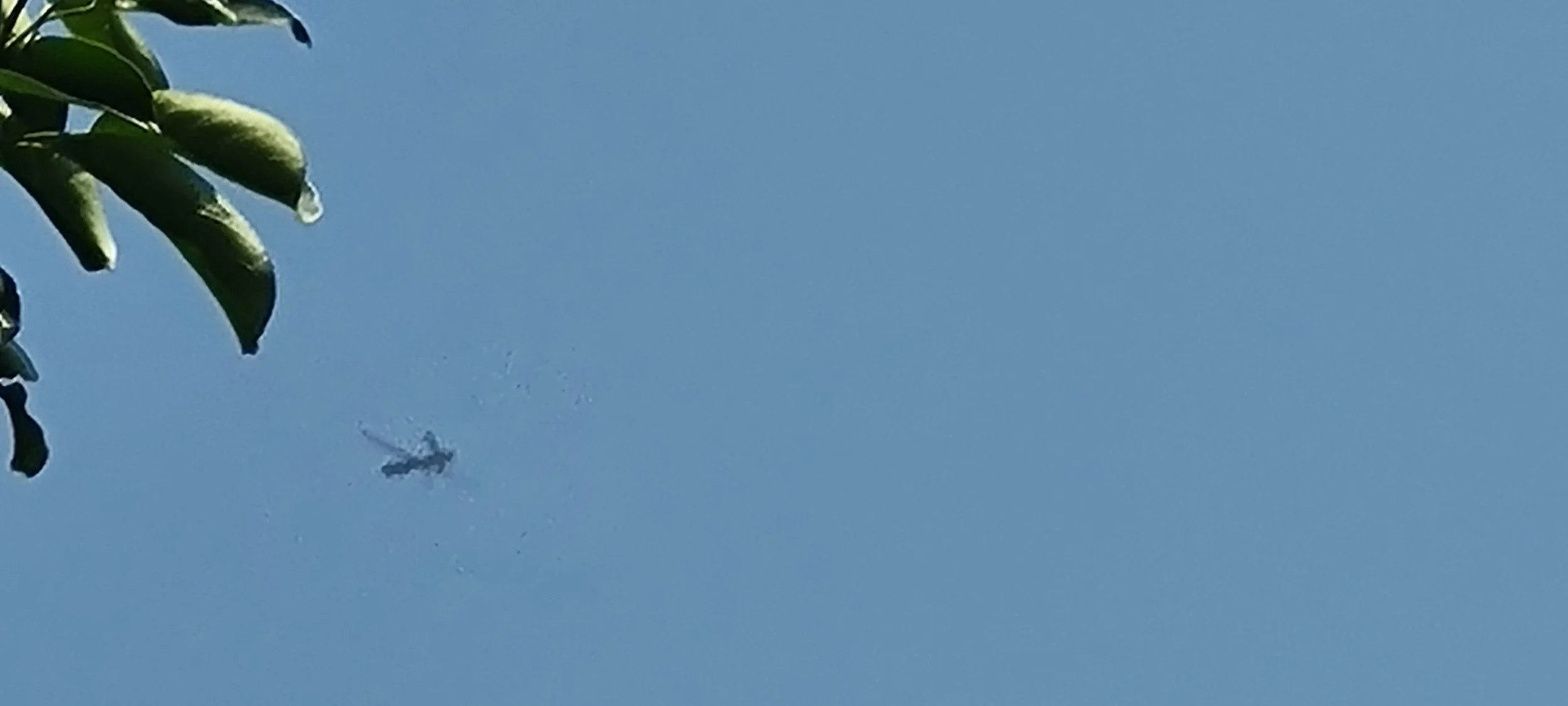
From this zoomed-in image, the aircraft is too small and blurred to identify with confidence. However, its overall shape suggests a central fuselage with a relatively slender body. It also has long, straight wings extending from either side, giving it a high-aspect-ratio appearance typical of surveillance aircraft. A rear-mounted propeller or pusher configuration is possible, as there appears to be a small extension at the back, although the image is too indistinct to confirm. The aircraft does not resemble a multirotor quadcopter. Instead, it looks much more like a fixed-wing unmanned aerial vehicle (UAV) designed for endurance rather than hovering. No external weapons, sensors, or markings are discernible because of the distance and image quality.
Given the location, and the fact that Hualien is home to major Republic of China Air Force facilities and military training areas, it would not be unusual to see military aircraft or UAVs operating nearby. However, this photograph alone is insufficient to determine whether the aircraft is military, civilian, or even a particular model.
The closest match I could find was… the NCSIST Teng Yun, (騰雲, "Cloud Rider"), Yes, it seems I have photographed one of the most significant pieces of indigenous military aviation technology Taiwan has ever developed. While I can't confirm that's what appears in the image, it is certainly a plausible candidate given that I was in Hualien, where flight testing has taken place.
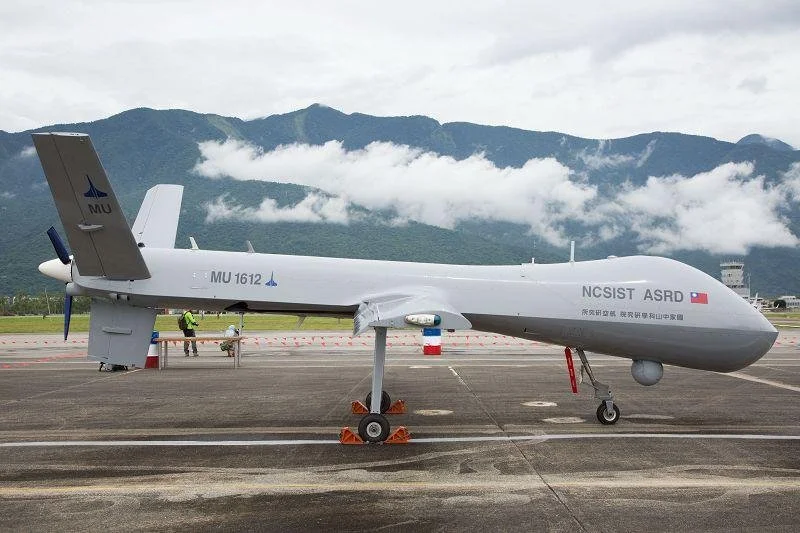
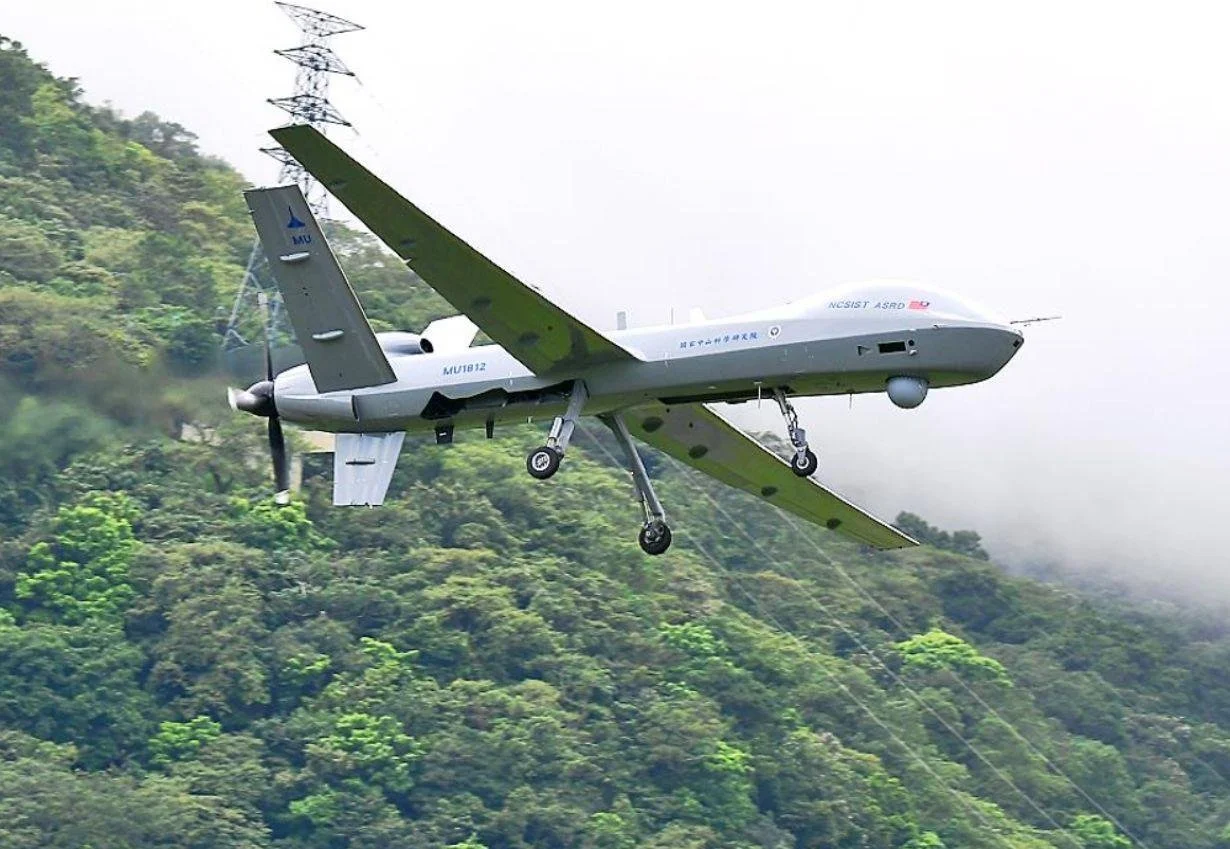
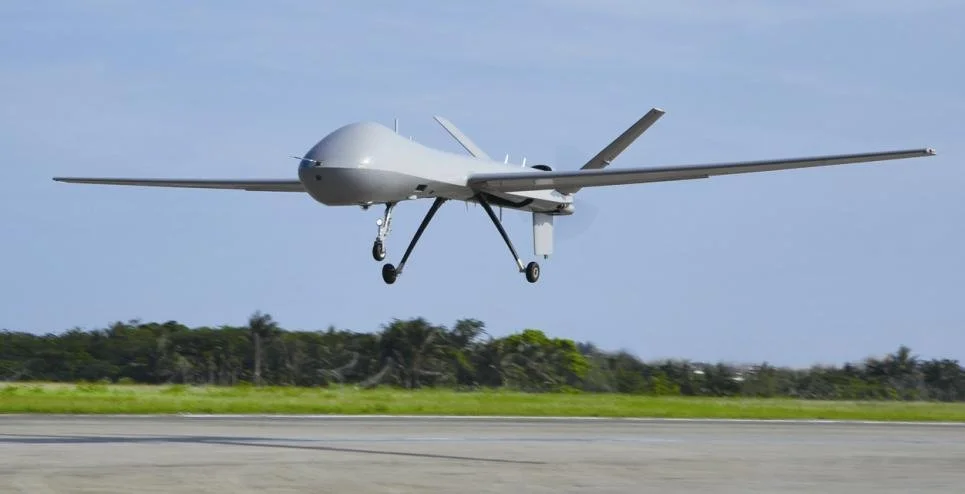
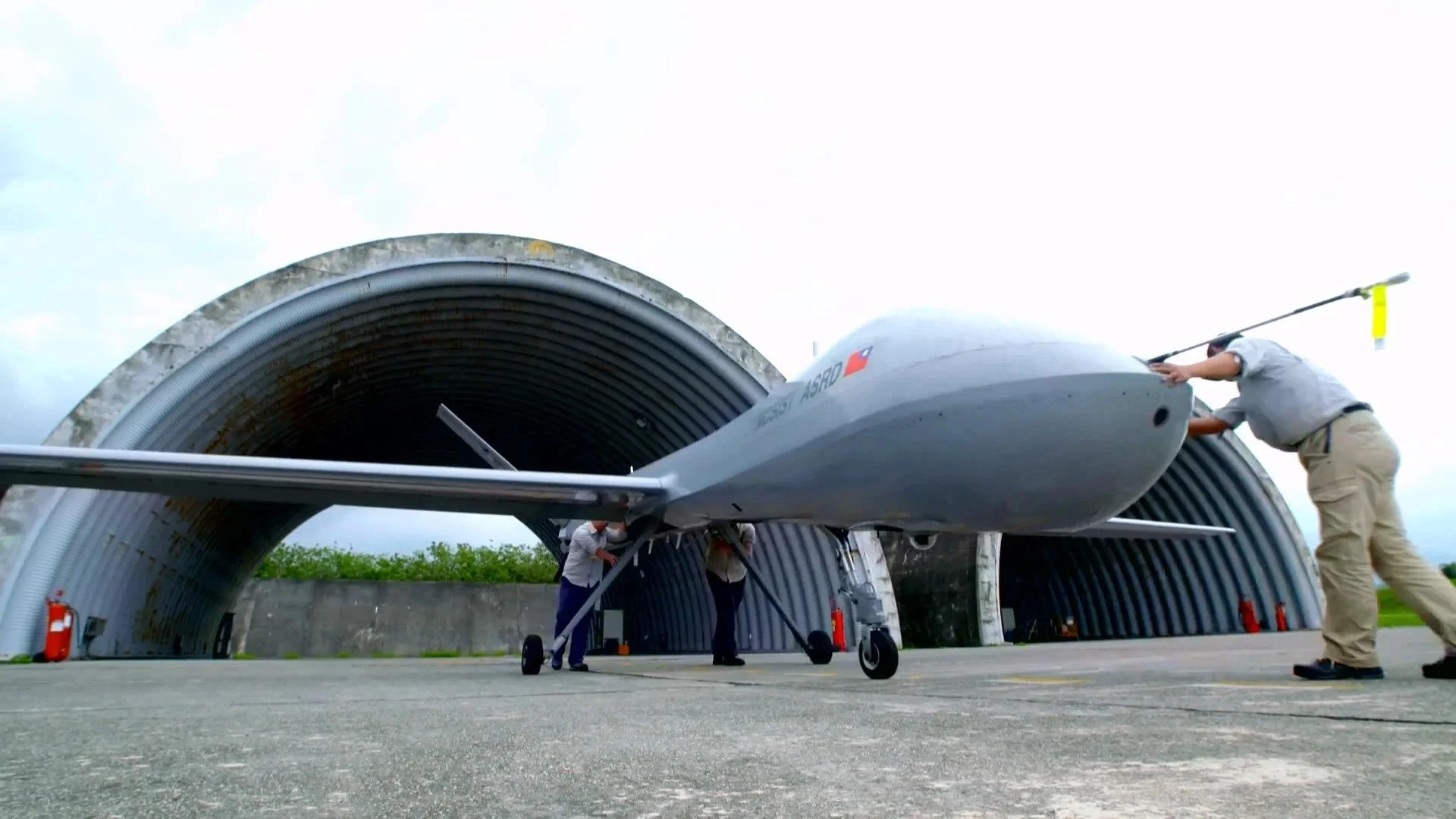
The Teng Yun is Taiwan's answer to the American MQ-9 Reaper or the Turkish Anka. It’s a medium-altitude, long-endurance (MALE) unmanned aircraft designed for reconnaissance and, potentially, strike missions. It has been developed by Taiwan's National Chung-Shan Institute of Science and Technology (NCSIST), the country's premier military research organization. Development began in the late 2000s, with the aircraft first publicly displayed in 2015.
The published specifications are broadly comparable to other MALE drones:
Length: about 8 metres
Wingspan: about 18 metres
Range: over 1,000 km
Endurance: around 24 hours
Service ceiling: approximately 25,000 feet (7,620 m)
Takeoff and landing: autonomous capability demonstrated during testing.
Its long endurance allows it to remain over an area for an entire day, making it useful for persistent surveillance.
Its role in Taiwan's defence is something I’ve been looking for… Unlike the small quadcopters that have become famous in Ukraine, the Teng Yun is intended as a strategic surveillance platform. Its likely missions include monitoring Chinese naval activity in the Taiwan Strait, tracking People's Liberation Army Navy surface groups, maritime patrol over Taiwan's eastern waters, identifying amphibious task forces, relaying targeting information to ships, aircraft, and missile units and conducting intelligence, surveillance and reconnaissance (ISR).
Taiwan's defence strategy relies heavily on detecting an invasion fleet as early as possible. A drone capable of remaining airborne for an entire day significantly expands that surveillance network.
Could it carry weapons? That has evolved over time. Early Teng Yun prototypes were primarily surveillance aircraft. Later versions introduced underwing hardpoints, indicating the potential to carry precision-guided munitions or other mission payloads, although Taiwan has released relatively little official information about intended weapons integration. The emphasis publicly has remained on ISR rather than showcasing strike capabilities.
Hualien is one of Taiwan's most strategically important military locations. It hosts the famous Chiashan Air Base, built into the mountains, with hardened aircraft shelters carved into rock and major Republic of China Air Force facilities. It also has an extensive military test airspace over the Pacific. Open reporting has noted Teng Yun test flights operating from eastern Taiwan, including Hualien, where the aircraft could fly safely over the ocean while engineers evaluated its navigation, endurance and sensor systems. That makes Hualien one of the places where an aviation enthusiast might realistically glimpse one overhead.
Its a symbol of a changing Taiwan The Teng Yun represents Taiwan's determination to develop its own defence technologies. For decades Taiwan relied heavily on imported aircraft and equipment. The Teng Yun reflects an effort to build a domestic aerospace capability alongside indigenous missiles, ships and other drones. That push has accelerated in recent years as Taiwan has drawn lessons from conflicts such as Ukraine and sought to strengthen its self-reliance.
So… what was it doing?
The most probable is simply that it was undergoing testing. During 2022–2023, the Teng Yun 2 was still in an intensive flight-test and evaluation program. Hualien's Chiashan Air Base was one of its primary operating locations, and Taiwan was conducting repeated sorties to evaluate endurance, flight controls, sensors, communications, and overall reliability before declaring the aircraft ready for service.
Some of the specific activities being tested included taking off autonomously going on long-endurance flights eventually exceeding 20 hours, then landing again. Electro-optical and infrared sensor performance, command-and-control links and electronic surveillance equipment are all tested. This will allow for communications over long distances and general reliability before operational service
Why Hualien? Hualien is actually an ideal place to test a large UAV. It offers large amounts of open Pacific airspace east of Taiwan, far less civilian air traffic than the western parts, the heavily protected Chiashan Air Base, and nearby military test ranges. It also offers easier recovery if something goes wrong over the ocean rather than over cities. Taiwan deliberately conducts many sensitive aviation trials on the east coast for these reasons.
It could also have been conducting operational training. By 2023, the program was transitioning from pure engineering tests toward operational evaluation. That means crews would have been practicing missions such as, maritime surveillance, identifying ships, tracking contacts, simulating reconnaissance patrols or operating with Taiwan's air defence network
In other words, they were beginning to fly it like a military aircraft rather than simply a prototype.
The timing is important….
By 2023, PLA aircraft were routinely entering Taiwan's Air Defence Identification Zone (ADIZ). Chinese naval activity around Taiwan had increased substantially. The lessons of Ukraine had accelerated Taiwan's interest in drones. Taiwan was trying to field more indigenous systems instead of relying solely on foreign purchases. That means a Teng Yun flying near Hualien wasn't necessarily responding to an emergency. It could simply have been another day in a very active testing and training schedule as Taiwan prepared a new capability.
An interesting historical footnote… Since the trip was in 2023, there's another noteworthy detail. In February of that year, one Teng Yun 2 prototype suffered a runway excursion during testing at Hualien Air Base after a mechanical problem. The aircraft was damaged but repaired, and testing continued afterward. That illustrates just how much development work was still underway during the period you visited.
So if your photograph does show a Teng Yun, you may have captured it during a phase when Taiwan was still proving the aircraft before it entered wider operational use—a small glimpse of an indigenous defense program that has become increasingly important as cross-Strait tensions have grown.
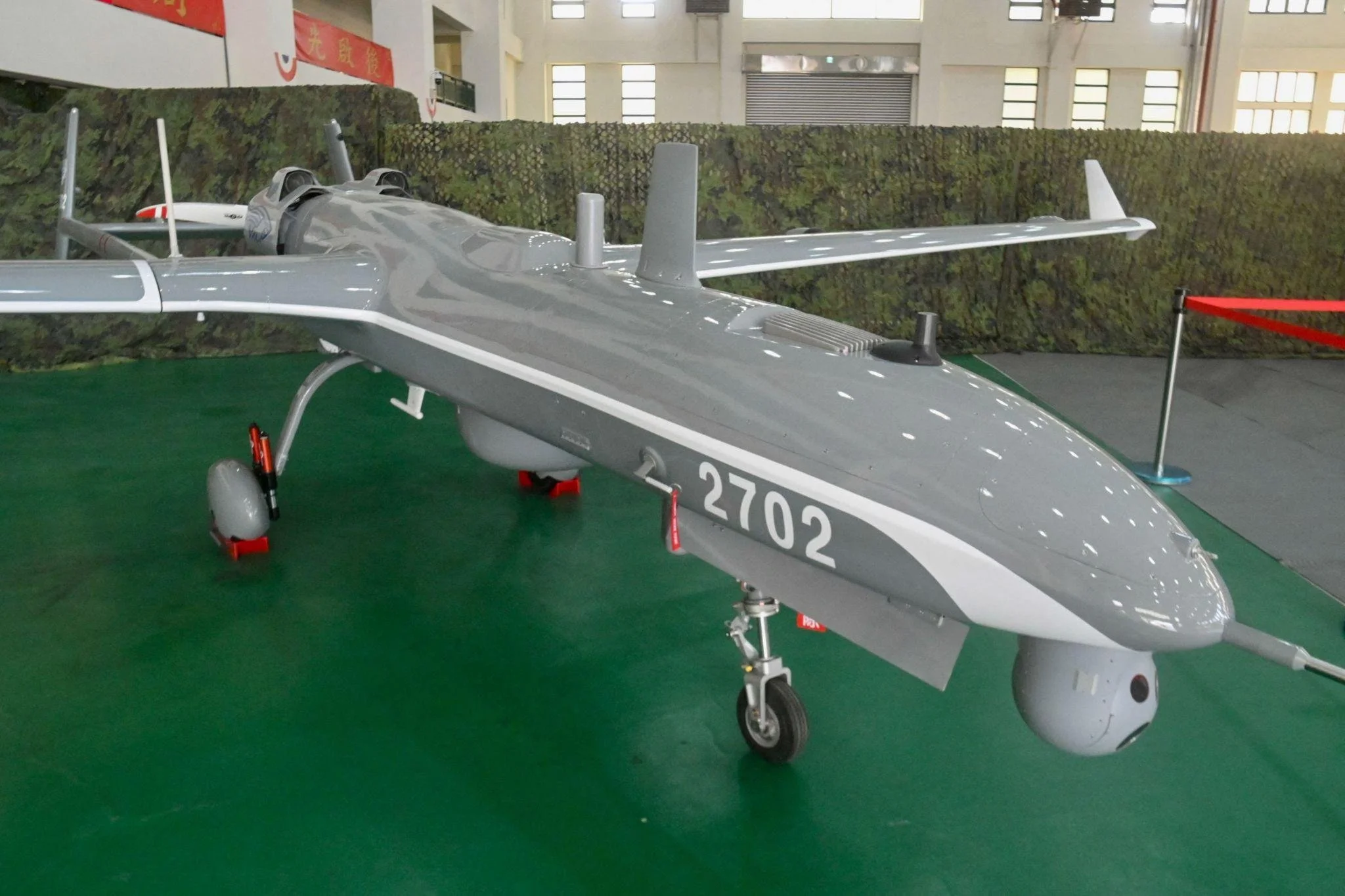
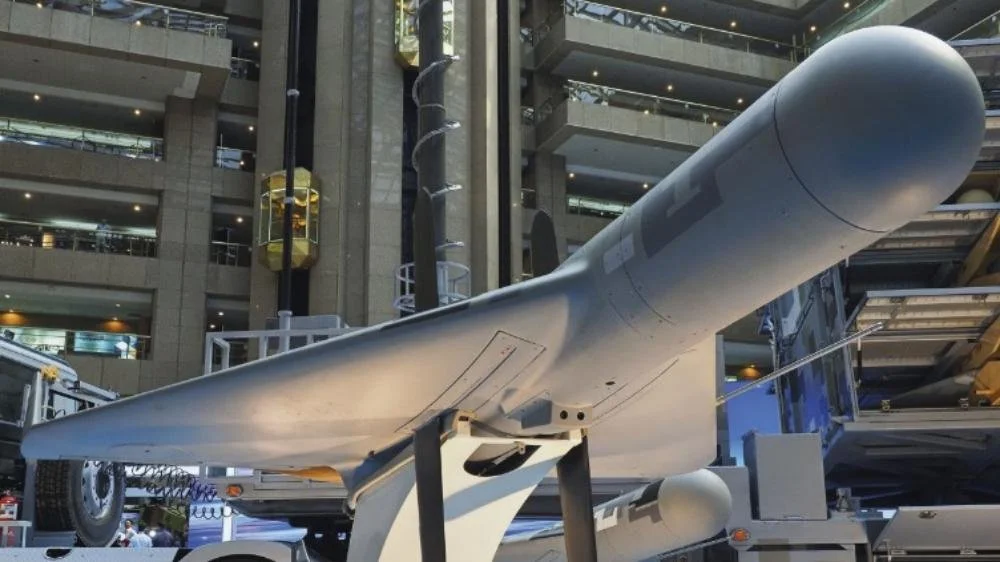
The Chien Hsiang ("Rising Sword") is perhaps Taiwan's most unusual drone. Rather than returning home, it is a loitering munition, sometimes called a "kamikaze drone." Instead of bombing tanks, it is designed primarily to hunt enemy radars. It can fly hundreds of kilometres, search for active radar emissions, dive into them and destroy them. Very much like the AGM-136A Tacit Rainbow missile the US attempted to create. That makes it an ideal weapon for suppressing Chinese air-defence systems before Taiwanese aircraft or missiles attack. Several variants have been revealed as the program has matured.
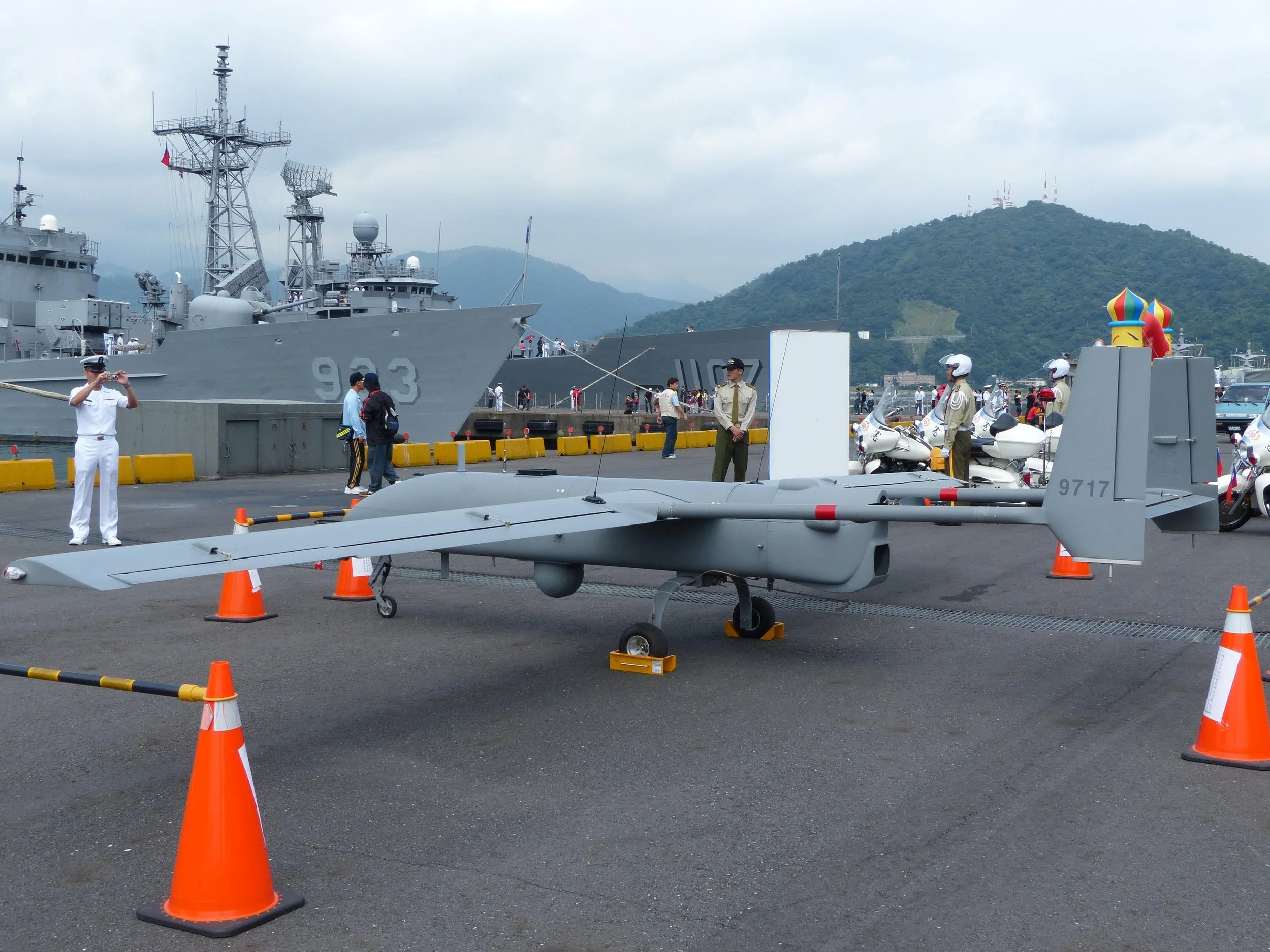
The Albatross and the Albatross II are Taiwan's workhorse reconnaissance drones. Compared with Teng Yun, they're smaller, cheaper and shorter-ranged. Their missions include coastal surveillance, naval reconnaissance, artillery spotting and border patrol. The Republic of China Navy has operated them for years around Taiwan's coastline and offshore waters.
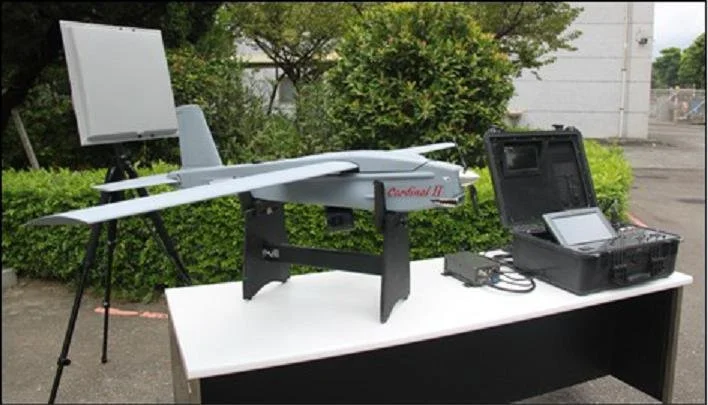
The Cardinal family are small tactical drones. Versions are the Cardinal I through III and the Fire Cardinal. Rather than flying hundreds of kilometres, they're launched by frontline troops. Typical missions include, scouting hills, checking villages, locating enemy positions, directing artillery and battle damage assessment Ukraine has shown how valuable this category of drone has become. Taiwan has reached the same conclusion. The Fire Cardinal, in particular, appears to bridge reconnaissance and attack. Instead of merely observing, later Fire Cardinal variants are intended to carry small munitions or function as loitering strike drones against tactical targets. Public details remain limited.
The Mighty Hornet is one of Taiwan's newer developments. It's a small loitering munition roughly comparable in size and concept to the U.S. Switchblade 300. Its intended targets include infantry, machine-gun nests and light vehicles. Rather than using expensive missiles, a small expendable drone can destroy these targets more economically.
Unlike the fixed-wing drones above, Capricorn is a helicopter UAV. Its rotary-wing design allows it to hover, making it suitable for surveillance, observation, communications relay, operating where a runway isn't available
Taiwan hasn't relied solely on domestic designs. The United States approved the sale of MQ-9B SeaGuardian/SkyGuardian drones, giving Taiwan access to one of the world's most capable long-endurance UAVs for maritime surveillance and intelligence missions.
Lessons from Ukraine
Perhaps the biggest change since 2022 is that Taiwan's drone strategy has expanded beyond these larger military systems.
The government has increasingly emphasized:
inexpensive FPV attack drones
commercial quadcopters adapted for military use
drone swarms
rapid domestic production
dispersing manufacturing so production can continue during wartime
This reflects the realization that a future conflict would require not only sophisticated systems like Teng Yun but also thousands of small, expendable drones to support troops across the island.
For someone visiting Taiwan in 2023, like on your research tour, seeing a drone overhead in places such as Hualien or along the east coast would have been a glimpse into a military that was already adapting to what has become one of the defining technologies of modern warfare.
This ties into…
The Drone Hellscape
This is one of the most discussed concepts in U.S. and Taiwanese defense circles today. Unlike a formal military doctrine, it's a descriptive term for a strategy of saturating the Taiwan Strait with thousands of unmanned systems to make a Chinese invasion extraordinarily difficult. The phrase gained widespread attention in 2024 after remarks by Admiral Samuel Paparo, commander of U.S. Indo-Pacific Command. He described creating an "unmanned hellscape" in the Taiwan Strait if China attempted an invasion, using large numbers of drones and autonomous systems to delay and disrupt PLA forces.
The basic idea is… Taiwan's greatest military challenge is geography. China has to move an invasion force across roughly 130–180 km (80–110 miles) of water. That means transporting amphibious assault ships, troop transports, landing craft, helicopters, escorting warships, logistics vessels. All of those have to survive the crossing before they can even begin fighting on land.
The Drone Hellscape concept aims to make every stage of that journey dangerous. Every step!
What would the drones actually do? Instead of relying on a few expensive aircraft, thousands of relatively inexpensive unmanned systems would perform specialized roles simultaneously.
First is the constant surveillance. Long-endurance drones like Taiwan's Teng Yun would remain overhead, watching ports, naval bases, amphibious fleets and helicopter formations Any invasion fleet would likely be tracked continuously.
Then comes the maritime attack. Large numbers of loitering drones could attack landing craft, patrol boats, missile boats, radar systems, communications antennas Even damaging a few ships could slow an invasion timetable.
Ukraine demonstrated that inexpensive first-person-view drones can destroy tanks, armored personnel carriers, trucks, artillery, engineering vehicles, Taiwan has taken those lessons seriously.
Once Chinese forces landed, these drones could target vehicles as they move inland.
Surface sea drones could patrol beaches channels harbors Some concepts envision unmanned boats carrying explosives, sensors, or electronic warfare payloads.
Autonomous underwater vehicles could detect submarines, lay sensors, monitor approaches and potentially attack shipping. This remains a developing capability worldwide.
Not every drone carries weapons. Electronic warfare is equally important. Some could, jam radios, interfere with GPS, relay communications and locate enemy emitters The information they gather can be as valuable as direct attacks.
One of the cheapest uses for drones is deception, and decoys. Hundreds of simple drones can force an opponent to activate radars, reveal air-defense positions, expend expensive missiles and divert attention from the real attack. A drone costing a few thousand dollars can compel the launch of an interceptor costing hundreds of thousands or even millions.
This matters for Taiwan. Their overall defense strategy is often described as the "porcupine strategy." The principle isn't necessarily to defeat China outright. It's to make an invasion slow, costly and uncertain The Drone Hellscape fits neatly into that philosophy. Instead of trying to match China ship-for-ship or aircraft-for-aircraft, Taiwan and its partners seek to multiply the effectiveness of their defenses with autonomous systems.
Much of this thinking accelerated after 2022. The war in Ukraine demonstrated that drones can find artillery within minutes, identify troop concentrations, destroy tanks, strike headquarters, correct missile fire, hunt logistics vehicles, operate around the clock. Military planners around the world, including in Taiwan, China, and the United States, have studied these developments closely.
It wouldn't replace traditional weapons. The "hellscape" wouldn't fight alone. It would support anti-ship missiles such as Taiwan's Hsiung Feng series, coastal artillery, naval mines, attack helicopters, fighter aircraft, surface warships, mobile rocket launchers and air-defense systems
The drones' main contribution is to improve awareness, complicate the attacker's plans, and create more opportunities for those conventional weapons to engage.
The concept also faces significant challenges. China has invested heavily in electronic warfare and GPS jamming, anti-drone systems, cyber capabilities, its own extensive drone fleet. Communications could be disrupted, and many drones would almost certainly be destroyed. Weather over the Taiwan Strait can also be harsh, particularly during monsoon seasons and typhoons, affecting small UAV operations.
So while "Drone Hellscape" is a compelling concept, it is not viewed by analysts as a silver bullet. Rather, it's one layer of a broader defense strategy designed to raise the cost and complexity of an amphibious assault.
From a historical perspective, the idea represents a notable evolution in warfare. During the Cold War, military planners envisioned stopping invasions with fleets, armored divisions, and tactical aircraft. Today, many envision that the opening hours of a conflict over Taiwan could instead feature thousands of autonomous systems in the air, on the sea, and beneath it—providing surveillance, jamming communications, serving as decoys, and carrying out precision attacks before many human soldiers ever come within visual range of each other.
Sources:
Wikipedia: National Chung-Shan Institute of Science and Technology
Military Factory: Taiwan Aircraft List (Current and Former Types)
Aviation Week: Taiwan’s Teng Yun UAS Nears Operational Test Milestone, September 14, 2023
Taipei Times: Indigenous Teng Yun 2 drone flies long-range test
Taipei Times: Locally built drone flies around Taiwan in trial
Indigenous drone breaks flight record - Taipei Times December 25, 2023
Taiwan Teng Yun 2 drone damaged during runway test | Taiwan News | Feb. 22, 2023 20:46
Taiwan’s Teng Yun 2 Skids off Runway on Test Flight – UAS VISION
