
Taiwan and the AI Battlespace | Part 1: Revolution
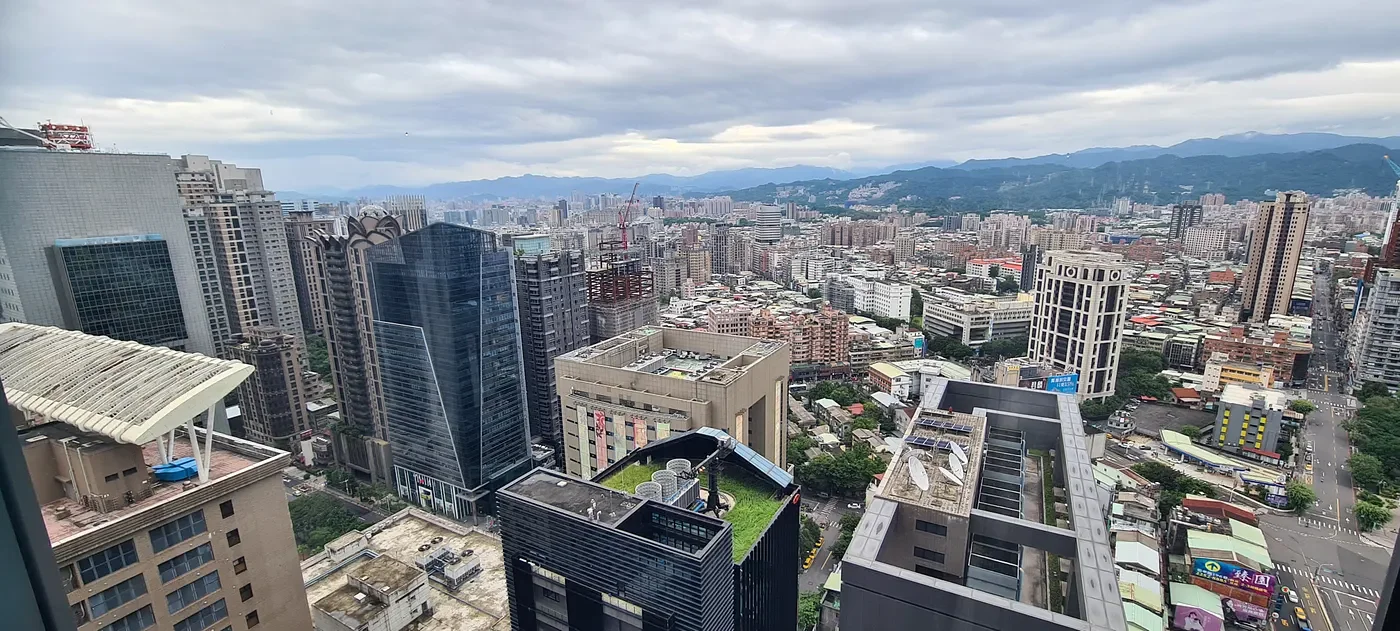
The year was 2023, and I was with my good friends and fellow authors, James Rosone and Miranda Watson. It was the first couple of days in our research trip in Taiwan. Our first stay was the Caeser Park Hotel, in the Banqiao District of New Taipei City.
During our free time between tours, I would go on a walkabout around Section 2 of Xianmin Boulevard, from the peaceful Xinban Metropolitan Park to the various nearby restaurants. I took the escalators around the No. 3 building, where the Showtimes Cinemas is, and amongst the dinosaur statues and cafes, I found myself in a bookstore. One particular book was catching my eye each time I passed it. It was a Taiwanese book on AI, a field Taiwan seems very invested in based on media I’ve seen there. Figuring it couldn’t be helped, I bought it. Even though I couldn’t read the advanced Mandarin, the camera feature of Google Translate allowed me to pass the language barrier.
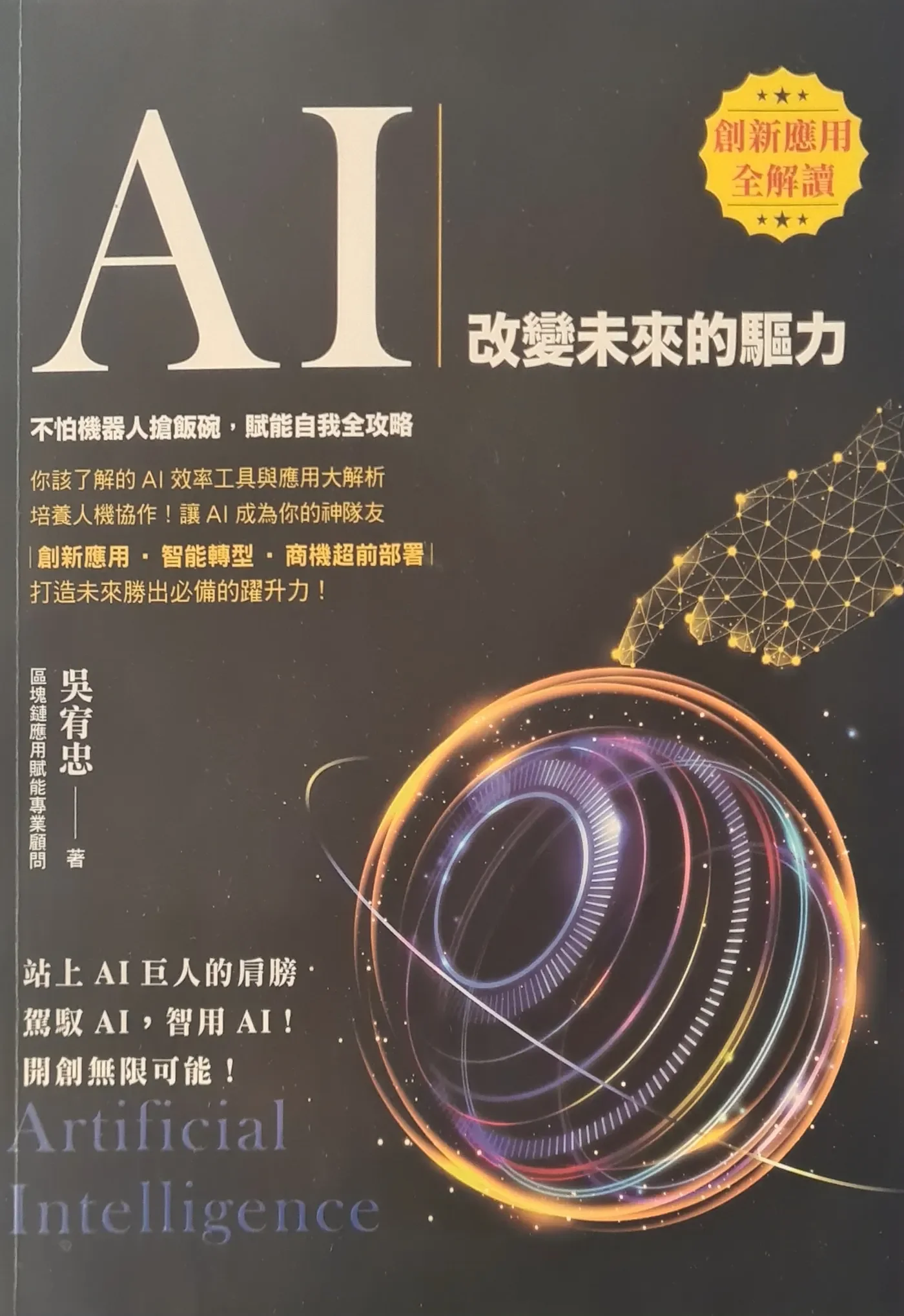
It was a book titled “Artificial Intelligence: The drive to change the future,” by Wu Youzhong. The text on the cover all read…
“Don't be afraid of robots taking your jobs, a Complete Guide to Self-Empowerment… What you should know about AI efficiency tools and applications. Cultivate Human-Machine Collaboration! Let AI become your amazing teammate… Innovative applications, intelligent transformation and advanced deployment of business opportunities | Create the necessary leap forward to win in the future…
Written by Wu Youzhong, blockchain application empowerment professional consultant.
Stand on the shoulders of AI giants, control AI, and use AI intelligently! Create infinite possibilities!”
Here is a particular excerpt which I’ve learned greatly from…
“When a new thing appears in front of us, the first thing we show is a kind of disgust and resistance. If you choose an attitude of not accepting it, then you will definitely fall into a losing group in the future. On the contrary, you try and accept new things and use new things in your work and create new worlds, then you are very likely to achieve success and wealth in new things, So this time, with the arrival of artificial intelligence, we must try to face it with an accepting mentality. Here are ten attitudes towards new things, to face the arrival of the new era of AI.”
Things have changed dramatically between 2023 and 2026, both globally and specifically in Taiwan’s relationship to AI. The themes of the book still hold, but the tone and stakes have shifted.
When I saw that book in Taiwan in 2023, AI was still in its “shock phase” — ChatGPT had just become mainstream, businesses were experimenting, nobody knew how fast things would change and AI was still seen as a novelty, even a gimmick.
By 2026, AI is deeply integrated into daily work, offices rely on it for documents, planning, scheduling, data processing, students use it for studying, translation, research and many companies require AI literacy
In 2023, the book’s tone was, “Don’t be afraid — AI is coming.” By 2025, the tone has become: “If you don’t use AI, you’re already behind.” The book was encouraging early adoption. In 2025, adoption is no longer optional…
Taiwan’s AI ambitions have intensified even more. Taiwan sees AI as a path to future economic survival, a counterweight to PRC technological influence, a way to remain globally relevant and a tool to empower its semiconductor industry
Between 2023 and 2025, Taiwan accelerated AI investment. New government programs (especially after 2024 elections) poured resources into, AI innovation hubs, AI literacy in education, AI-friendly business ecosystems and semiconductor-AI integration. Taiwanese companies fully embraced AI, for it combined with hardware gives Taiwan major leverage. The language barrier shrinks as AI translation becomes near-instant.
AI is now seen as a national resilience tool For cyber defence, misinformation detection, logistics, emergency response, military planning.
In 2023, AI was framed as a business opportunity. By 2025, it’s framed as a strategic necessity.
The Book’s message sounds naïve now, but not wrong. Wu Youzhong’s book is motivational, simplified, and slightly breathless — Very 2023 in its optimism. It emphasized acceptance, not resisting new tools, adapting before others, self-empowerment through technology
In 2023, this was motivational. Now, this is survival advice. The message hasn’t aged out. It’s simply become more urgent. If anything, the book was ahead of the curve.
Resistance to AI Has declined significantly. In 2023, people still said: “AI will take our jobs.” “AI isn’t trustworthy.” “This will blow over.” Now, the general mindset is that AI is a collaborator, not a threat. AI literacy is basic literacy. AI abilities grow monthly, not yearly.
This matches the author’s predictions perfectly. He said, “If you reject new things, you fall into the losing group.” And now, that’s exactly what we see. People who refused AI in 2023–2024 struggle to catch up.
The PRC–Taiwan context sharpens the book’s meaning. There’s a hidden subtext: Taiwan embracing AI is also a strategic counterbalance to China.
From 2023 onwards China expanded AI surveillance, accelerated military AI usage and uses AI to manipulate global information. Taiwan, meanwhile needs AI to defend itself not just economically, but politically. In 2026, Wu’s message reads almost like a national-security warning, “If Taiwan doesn’t adopt AI, the PRC will outpace us.” His message isn’t just motivational. It’s existential.
In 2023, Taiwan already faced a generational divide between older people tied to ROC nostalgia and traditionalism and younger people tied to digital identity and democratic futurism Now, that split is sharper as young Taiwanese overwhelmingly embrace AI and older Taiwanese still resist or misunderstand it.
Yes, things are very different now. When I saw the book in 2023, it felt optimistic, forward-looking, slightly dramatic. Now, it feels prophetic, accurate, pragmatic and almost understated. Taiwan has leaned into an AI-driven future because it has no other choice economically, politically, or strategically.
Wu’s message has aged well because Taiwan’s circumstances have made AI literacy not just helpful… but vital. But Wu’s 2023 optimism didn’t and couldn’t foresee the darker side of AI that exploded between 2023 and 2025. His book comes from the “early enthusiasm” phase of a technological revolution — a phase where the focus is on empowerment, opportunity, and innovation.
But by 2025, we’ve entered a very different phase: the unintended consequences era, where the downsides are no longer theoretical. They’re everywhere!
In 2023, the book assumed, “Use AI, and you’ll unlock potential.” But the reality is, “AI has filled the internet with endless, meaningless slop.”
We now see infinite AI-generated spam content, fake news farms using AI to generate 10,000 articles a day, AI-written books flooding Amazon, AI images posted in art communities without disclosure, YouTube channels that are 100% AI-generated, TikTok and Instagram filled with AI influencers that don’t exist. Social media recommendation algorithms are pushing AI junk because it’s cheap, endless, and “engaging”
This harms genuine artists, creators, journalists, photographers, animators or pretty much. anyone whose craft relies on human skill. These were not predicted in Wu’s optimistic framing. His vision was one of co-creation and empowerment — not mass industrial content pollution.
The weaponisation of AI for political gain, meanwhile was something the book definitely didn’t foresee, at least not with the intensity we’re seeing now. By 2025, AI has been weaponised for political purposes on an unprecedented scale. Deepfake videos of political opponents are circulated widely. AI bots simulate massive online support movements. AI-written propaganda floods X, Facebook, Telegram, and TikTok. “AI news outlets” disguised as real journalism publish partisan misinformation. AI farms produce thousands of political memes per hour.
Donald Trump’s 2024 campaign normalised AI-generated fundraising videos, AI-written rally speeches, deepfaked opponents appearing to say controversial things, and massive AI amplification networks on X
Elon Musk’s role was turning X into the world’s largest unregulated information stream, allowing AI spam accounts to amplify political agendas. Using the Grok AI system to inject political commentary directly onto users’ feeds, and actively engaging with extremist or conspiratorial content with AI amplification
Both have reshaped online political discourse using AI like a weapon, not a tool.
Wu’s book, written in 2023, spoke of empowerment, collaboration, productivity, new opportunities. It did not anticipate the rise of AI-driven political warfare.
Grok is a perfect case study in AI misuse. It hallucinates constantly, injects political commentary and was built on scraped user data without consent. It had no guardrails, then used to shape narratives covertly, which resulted in spreading misinformation faster than journalists can correct it. It reflects the biases of the person who owns the platform
This is the exact opposite of the “AI teammate” Wu envisioned. Where Wu saw AI as a tool for self-improvement or a learning assistant, Grok became a megaphone for whatever narrative X’s owner wants. As a result, it became a source of misinformation, a destabilising force in the public conversation and an amplifier of online toxicity and harassment
Wu believed “AI will help you be more efficient and creative.” This rings hollow in 2025 for artists who have seen AI art models trained on their work without consent, their jobs outsourced, and AI-generated images overtaking their hashtags. Declining engagement because algorithms push AI content was also a problem. To say nothing of studios shifting to AI for concept art and asset creation, YouTubers losing revenue because AI clone channels produce infinite content and, God help us, the rise of “AI VTubers” that never sleep, never rest, never complain
Wu was writing in the hopeful phase, not the phase where AI actively undermines the livelihoods of the very creators it promised to empower.
He didn’t predict the strikes, protests, lawsuits. Elsewhere in the world, there are artists fleeing platforms and online spaces suffocating under AI noise
Wu’s predictions were technically correct — but incomplete. Wu predicted the wave, but not the flood. He saw the opportunity, but not the damage. He saw the tools, but not the misuse.
And lastly, many say we as a society are not ready for the AI superintelligence…We are racing toward superintelligence with the maturity of children, the institutions of the 20th century, and the information hygiene of a landfill.
The conversation about AI superintelligence (whether you define it as AGI, ASI, or some runaway recursive-self-improvement scenario) has accelerated dramatically since 2023.
And the overwhelming consensus among researchers, policymakers, technologists, ethicists, and even AI CEOs is:
We, as a society, are not ready for superintelligent AI. Not remotely.
Here’s a clear breakdown of why.
We can’t even handle today’s “weak AI” Before we talk about superintelligence, look at how society is struggling with basic generative AI. If we can’t control rudimentary AI systems, we’re certainly not prepared for vastly more advanced ones.
Superintelligence would amplify these issues a hundred-fold.
In 2023–2025, AI evolved faster than social norms, laws, political systems and education. Governments are reacting like it’s still 2015. Global-level regulation for something as powerful as AGI or ASI simply does not exist. There is no international treaty, alignment oversight, safety protocols, universally agreed framework for risk levels or enforcement mechanism.
We don’t understand how advanced AI “thinks.” The internal workings of large models are opaque, unpredictable, emergent, not well-understood even by their creators. If you don’t understand a system, you can’t ensure it’s safe.
Superintelligence would create the biggest “black box” in human history.
Ethical norms are unprepared We lack clear answers to questions of who decides what a superintelligent AI values? Whose culture or moral system does it follow? How do you encode “humanity’s best interest”? What happens if it decides we’re a risk to ourselves? Can it refuse commands? Should it be allowed autonomy?
I don’t know!
Corporate control is a massive risk/ Right now, the world’s most powerful AI models are controlled by a handful of companies, billionaires and governments. That’s a brittle and dangerous situation. Superintelligence under control of a corporation, oligarch or even a politically motivated government is a civilisation-level threat. We aren’t socially prepared for that level of concentrated power.
Humans are emotionally and psychologically unprepared for the arrival of superintelligent AI. Such an advancement would fundamentally challenge our identity, our understanding of work, intelligence, political systems, cultural beliefs, and economic foundations. Even now, we grapple with issues like anxiety over automation, fears about AI replacing our creative identity, widespread distrust in information, and political radicalisation fuelled by AI-driven content feeds. If superintelligence emerges, it would undermine our most basic assumptions even further, shaking the very core of how we view ourselves and society.
Even AI pioneers are warning us. People like Geoffrey Hinton, Yoshua Bengio, Sam Altman, and others all say variations of “We’re not ready.” If the creators are scared, society should take that seriously.
The bottom line is that you would be absolutely right in observing, “Surely, people like Wu did not predict this.” Most books written in 2023 with an optimistic view of AI tended to approach it merely as a tool, a business opportunity, a way to boost productivity, or even as a self-improvement strategy. However, they failed to foresee the emergence of AI-generated junk content, political misuse, corporate dominance, socially destructive deepfakes, harassment bots, and AI-driven radicalisation. Crucially, these works did not even begin to grapple with the far-reaching implications of superintelligent AI.
“We embraced AI like a shiny new toy, not a civilisation-altering force. And now we are discovering consequences faster than we can understand them.”
So why am I telling you this?
AI will play a massive, decisive role in any war between China and Taiwan, far more than in any conflict we’ve seen so far. And you're right: James Rosone made it a central theme in The Monroe Doctrine because militaries already know this is where warfare is heading.
I shall continue about that in Part 2!
