

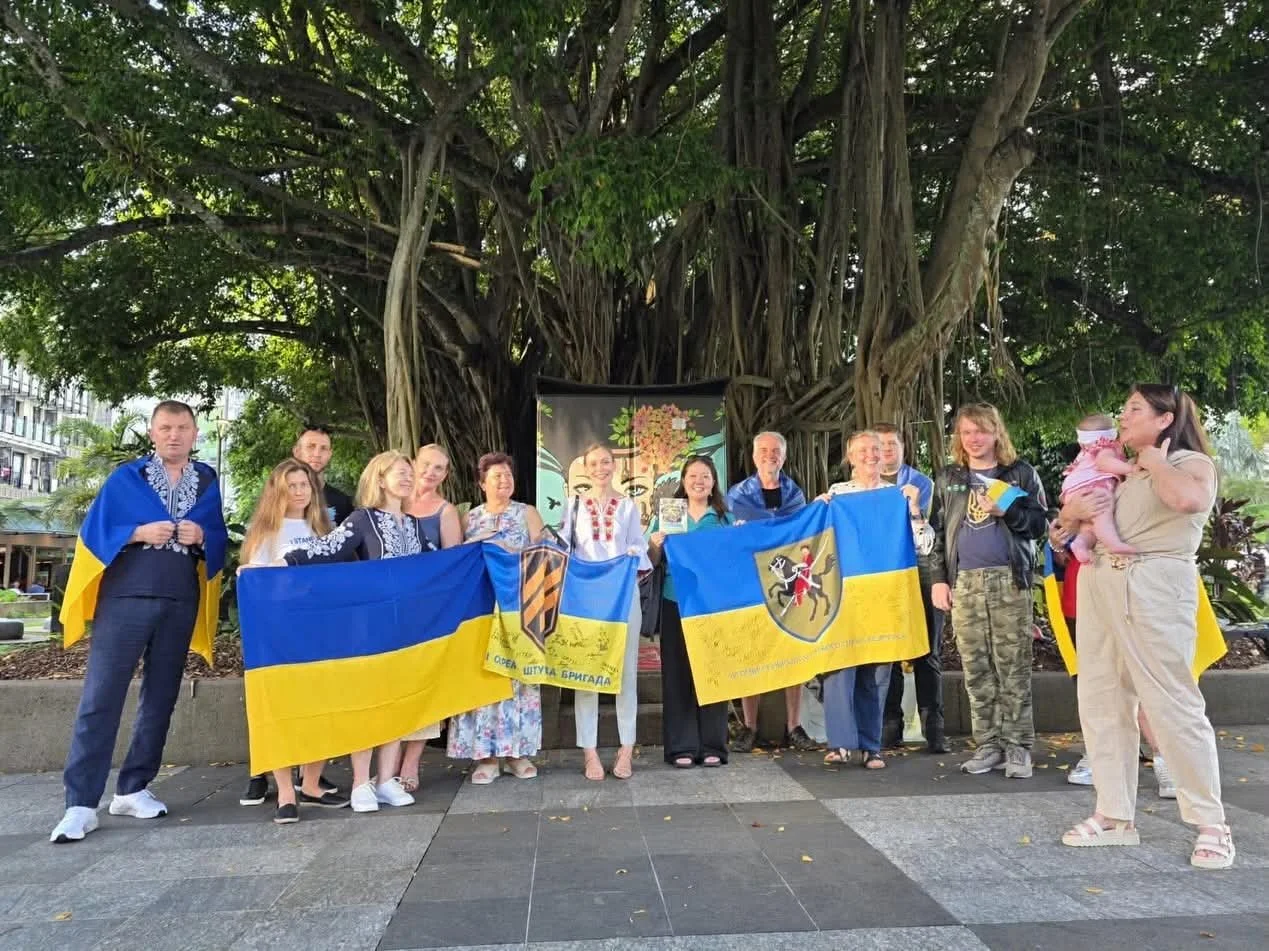
The morning of the 24th of February is a date that carries weight. For many, it is not just another square on the calendar. It is an anniversary that has reshaped Europe, tested alliances, and forced ordinary people across the world to ask themselves uncomfortable questions about courage, sovereignty, and what they are willing to stand for.
I remember when it came to be such a date… It was during my tenure at Volunteering North Queensland, a period of meaningful admin work, that a distant rumble on the global stage hinted at unrest. After twenty failed ceasefire attempts and years of apparent stalemate, trouble was brewing once again in Ukraine’s turbulent east. The spectre of war loomed as Russian troops amassed along Ukraine's borders. Images of tanks manoeuvring through the snow permeated news feeds, while United States officials reaffirmed “ironclad” support for their NATO allies, with the notable exception of Ukraine itself.
Unbeknownst to me on the 24th, as I concluded my workweek, the situation I had been monitoring was on the brink of a seismic shift. As the day transitioned to Europe, the Russian invasion of Ukraine commenced, thrusting the world into a new and ominous chapter.
The next day, I was with my father and his friends drinking at the Tiny Mountain Brewery, talking all it. Meanwhile, I was checking my phone, watching it unfold in real time. This was it, I realized. The sabre was no longer being rattled, but was now being drawn.
The shock and dismay I felt were palpable as Vladimir Putin’s rogue nation brazenly announced a "special military operation" purportedly aimed at supporting the Russian-backed breakaway republics of Donetsk and Luhansk. These regions had been entangled in conflict with Ukraine since 2014. Putin's announcement was accompanied by irredentist rhetoric, challenging Ukraine's right to exist and disseminating false claims of neo-Nazi governance persecuting the Russian minority. The stated goals were to demilitarize Ukraine and remove her leadership, neither of which they have achieved four years into their “three-day operation.”
However, the impact of the invasion was no longer felt in Ukraine’s east. It was now felt across the entire world. Among them was the Ukrainian community of Queensland, which I have come to realize is strong beyond measure.
These are some of the stories I found…
The Time Has Come
Now we come to the morning of the 24th of February 2026, when I finally did something I had been meaning to do for a while. I got in my car and made a straight run to Cairns. The drive north felt purposeful. There were long stretches of highway. Cane fields rolling past, then after Ingham came the ascent up the range to the cheerful seaside town of Cardwell. Later came Tully, the town you could tell you were near by the seeming ever-present rain clouds. Then came the push further then I have usually gone - All the way up to Cairns. All the while, there was the kind of Queensland sky that seems too wide for any one person’s thoughts, and yet my mind was fixed firmly on Eastern Europe.
There was a Stand With Ukraine vigil being held on the Cairns Esplanade. A quiet stretch of waterfront that has seen festivals, markets, and sunset walkers. But that morning, it was about something heavier. Something global, carried into a small corner of North Queensland.
On the way there, I listened to Overreach: The Inside Story Of Putin’s War Against Ukraine by Owen Matthews, the quotations from it will enlighten and light up spirits. Interestingly, it was narrated by Saul Reichlin, who is also veteran narrator of Horus Heresy audiobooks. In the same tone, he can be describing interstellar civil war, Primarch betrayals, and the rallying cry of “Vulkan lives!” from the grimdark future of the 41st millennium… or narrating the very real history of Russia’s invasion of Ukraine.. On a humorous note, this whole geopolitical situation feels like a Horus Heresy, in that it’s a big, multi-faction story with smaller individual-centric shorts in between, there’s a traitorous dictator at the centre, and it’s gone on for way too long.
Anyhow, the audiobook filled the cabin with his calm narration describing strategic miscalculations, political hubris, and the human cost of ambition. It is one thing to scroll headlines. It is another to sit with the long arc of events laid bare — to hear how decisions accumulate, how pride metastasises into tragedy, how overreach becomes doctrine.
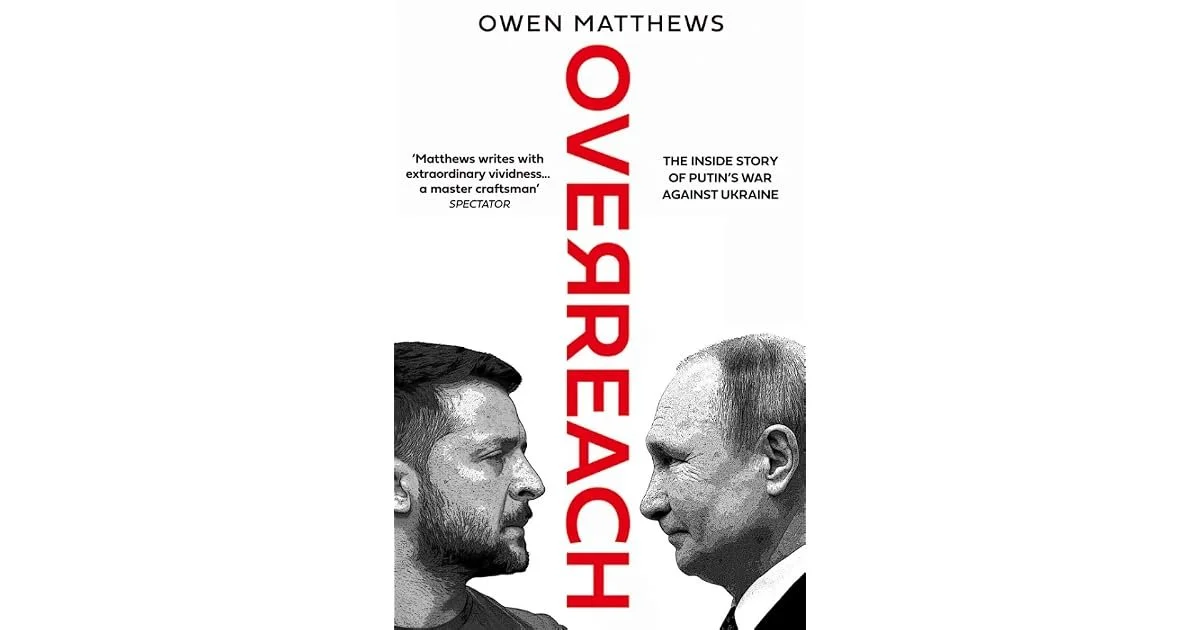
The cover of the book. Of all the recommended reads in this blog, it’s the one I recommend the most.
Many quotations, some of which I had memorized well before, struck like flares in the dark. They reminded me that history is not inevitable. It is made by choices, egos, courage and failure. By ordinary people caught in the wake of forces far beyond them. As the kilometres rolled by, those words did something unexpected. They did not just inform me. They steadied me. They reminded me that showing up, even quietly or symbolically, matters.
Eventually, the rolling mountains gave way to cane fields, and eventually the mountains of Cairns containing the city like great walls of a massive bastion. Mount Bartle Frere dominated the skyline to the south The sharply pointed, unmistakable peak of Walsh’s Pyramid rose abruptly from the flat cane fields. Finally Mount Bellenden Ker was often shrouded in cloud and received some of the highest rainfall totals in Australia. It sits south of Cairns and forms part of the same dramatic backdrop as Bartle Frere.
All of these peaks are part of the Wet Tropics World Heritage Area, where ancient rainforest meets rugged granite and volcanic uplifts. The mountains rise quickly from sea level — which is why Cairns feels almost enclosed, hemmed in by green walls on one side and reef-dotted ocean on the other.
It’s one of the few places in Australia where you can stand on an esplanade by the Coral Sea and look up at near-vertical rainforest mountains within minutes.
I arrived at Jack's Backpackers, a cheap place to stay the night, which had a venerable feel to it. As I sat in the common lounge area, fans circled, keeping ventilation in the hot, arid climate, the rooms were filled with the chatter of youthful tourists who have come here on their long journey around Australia. Who knows what they are here for? Mostly to get away from everything, to find new things here and so on and so forth.
I arrived at 4:30PM. Fashionably early, as I’d say. The Esplanade was hot in that late-afternoon Far North Queensland way. The light beginning to soften, palm shadows stretching long across the grass. I had imagined something bigger. In my head, perhaps unfairly, I had scaled it up to the emotional weight of an ANZAC Day dawn service. Flags in clusters. A hush over a crowd. The slow build of shared silence.
Instead, at first, there was no one. Just the waterfront. The lagoon. The noise of families and couples indulging in such simple things. I walked around the nearby stores, half wondering whether I had misread the time.
Then I noticed something — easily the most unexpected takeaway of the afternoon. A busker sat a short distance away with a guitar, a small handwritten sign propped beside him advertising “Yoga Songs.” Nearby, a pair of devotional musicians in traditional dress played kirtan-style music, the sort many associate with Hare Krishna chanting, though I can’t say for certain. While I’m personally not one of them, I see them adding nice music to the waterpark and encouraging inner peace in this world, and I respect that.
The guitarist was singing in Sanskrit, or perhaps Hindi, but the tune was unmistakable. It was “Wild Mountain Thyme.” I know that melody well. I’ve heard it through Celtic Woman, Ella Roberts and Colm R. McGuinness — pulled from various Spotify wanderings over the years. It’s one of those songs that carries hills and longing and a kind of old-world steadiness in its bones. But here it was, reframed with different lyrics laid gently over a Scottish-Irish folk melody.
In that moment, that became my song of the day. I walked over and slipped a five-dollar bill into his guitar case. “A unique version of Wild Mountain Thyme,” I said. “I like it.”
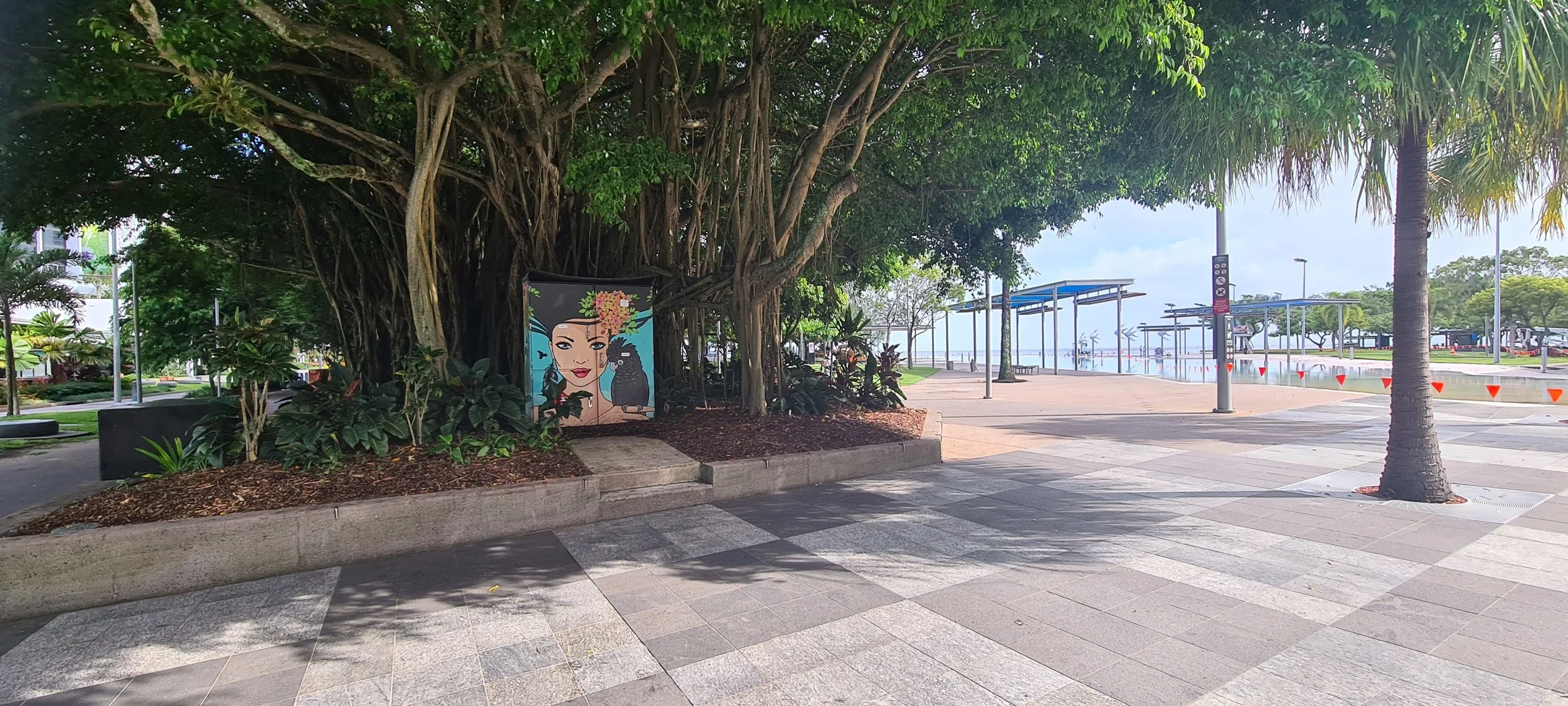
The Cairns Esplanade, pictured by me the day after.
Later on, I see a couple. The man was carrying a folded table and wore a Ukraine shirt. The lady wore a white dress and yellow-and-blue earrings, carrying a box of various memorabilia related to Ukraine.
They noticed my shirt, and I swiftly introduced myself. I got to know them… Lara, and her husband, Roy, if I recall correctly. Warm, grounded people. Not loud activists. Not self-promoters. Just steady.
As we talked, I realised something: this wasn’t just symbolic support for them.
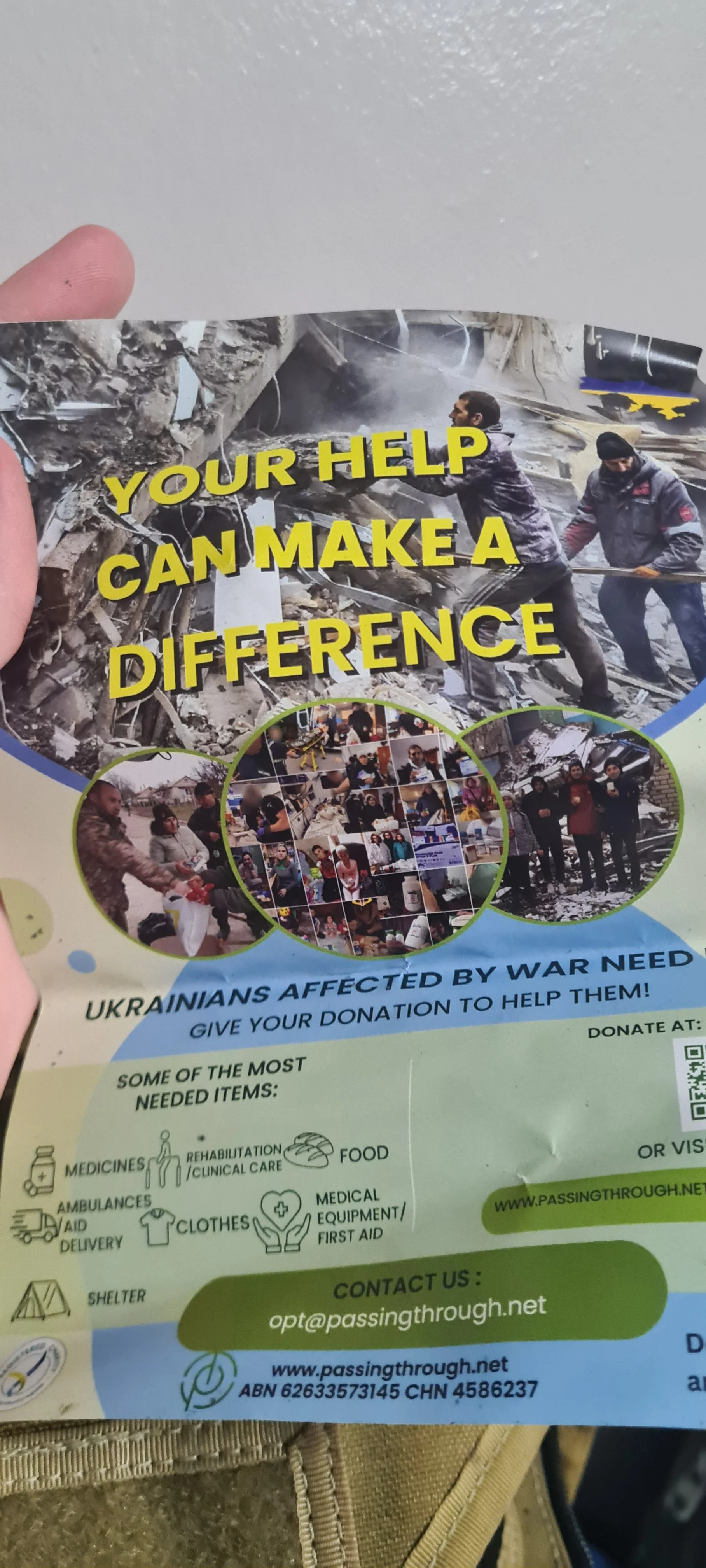
They were members of Only Passing Thru (OPT), a charity NGO providing medical aid directly to Ukrainian soldiers. Lara was actually scheduled to go back to Ukraine – yes, back again.
“Where in Ukraine will you go?” I asked. To which she named locations that were still in active frontlines. “May God be with her,” I would utter to myself for days to come.
Make it stand out
A leaflet given to me on the day by Lara, outlining her organization’s charity work. Please do support them if you can.
That was only the beginning. Irina was another lady dressed in a traditional Ukrainian dress. She was a fluent Ukrainian speaker, and educated us on various important pieces of the language. She would later give a speech as part of a group photo, pretty much saying all the usual stuff courtesy of the Ukrainian community of Queensland, ending it on a catchphrase that we will continue to use…
“Ukraine is strong. Ukraine is fighting. Ukraine will endure.”
There was another lady, Lola was her name. She had various tattoos, as well as some decorative clothing. She was very open in her emotions. She was quite nervous at the thought of being with people who thought the same because she had felt very alone. I did my best to ensure that she was welcome and that she had a friend to speak to. She has a brother that is serving over on the front lines. She showed me a photo of the brilliant bald man who was talking to some media as part of a news post.
Tears of strongly mixed emotions dominated her dear eyes. However, she was still standing strong. Strong enough to be vulnerable. She thought highly of her brother for doing such a thing. In turn, I had told them about my own personal experiences with Ukraine, of a friend whose name I cannot say, who made the ultimate sacrifice in Avdiivka.
She thought highly of her brother for doing what he was doing. And you could see how deeply she carried that weight.
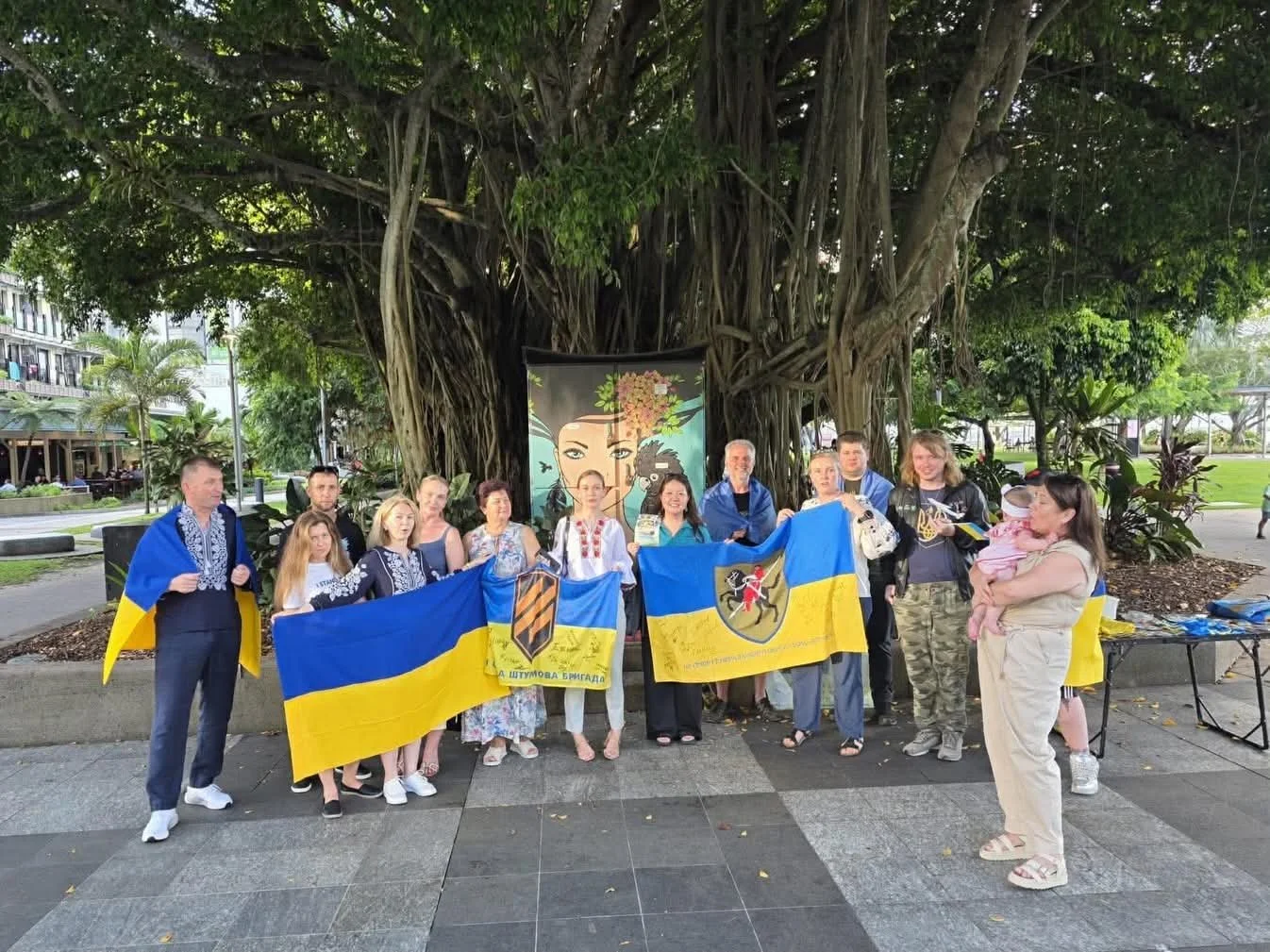
All of us together! United, we are strong.
And indeed, there were many other people there, like a husband and wife duo. There was a lady with her babies who looked so sweet and precious.
For the rest of the day, we were talking about personal experiences.
There was another Aussie man named Isaac who was local to the region who was well-versed in, shall I say, “interesting infodumps,” because they were intriguing, rather than long-winded – Not at all uninteresting, especially for me. Some had come from various spots in the Atherton Tablelands.
I had brought various memorabilia with me to offer to the vigil, if we were going to do that. There was a candle, there was a cheap model of the Antonov, which I gave to Lola in the end, and a Ukrainian flag. That bag would be filled with a bunch of bananas, courtesy of Lara’s husband.
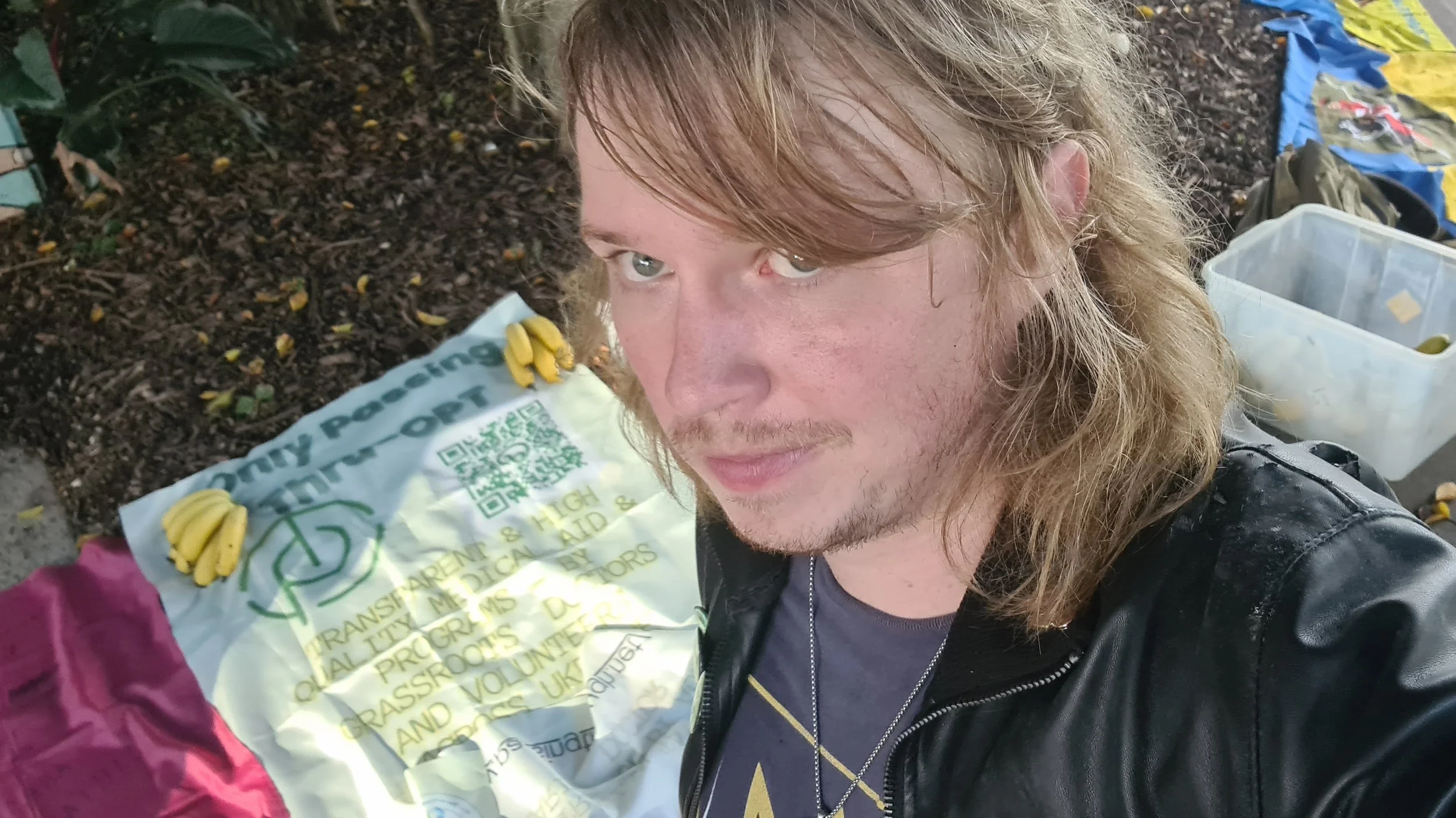
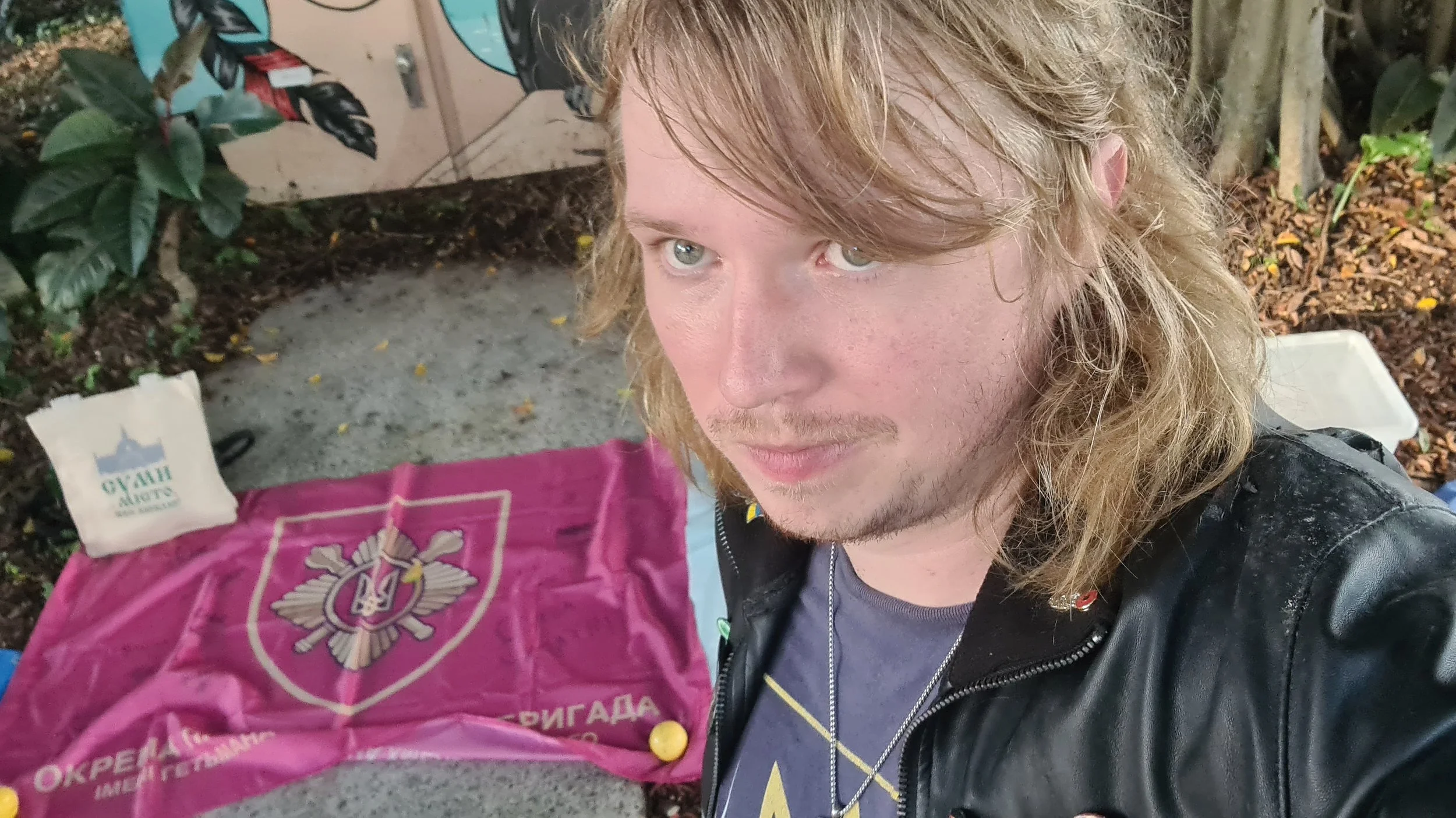
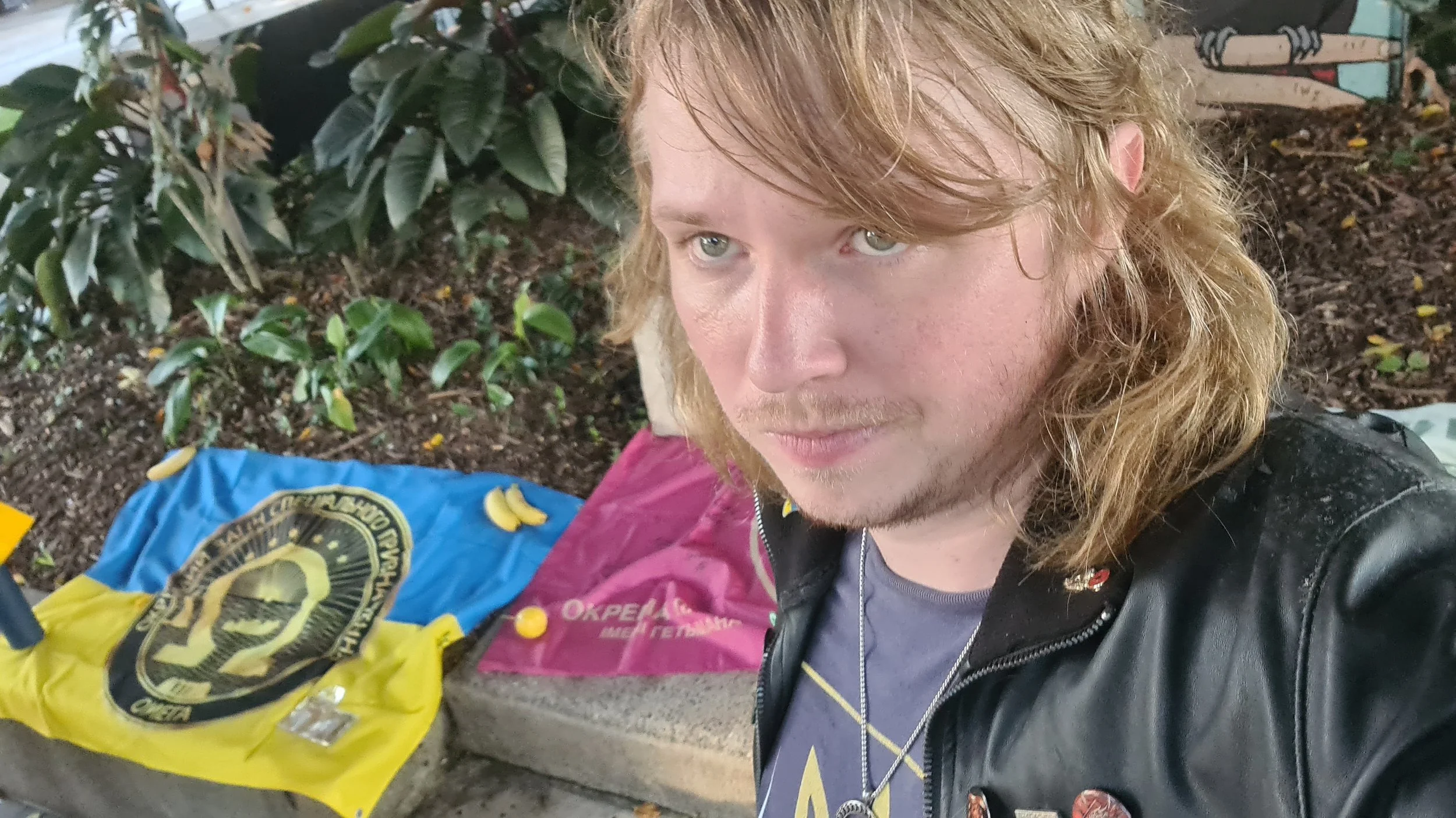
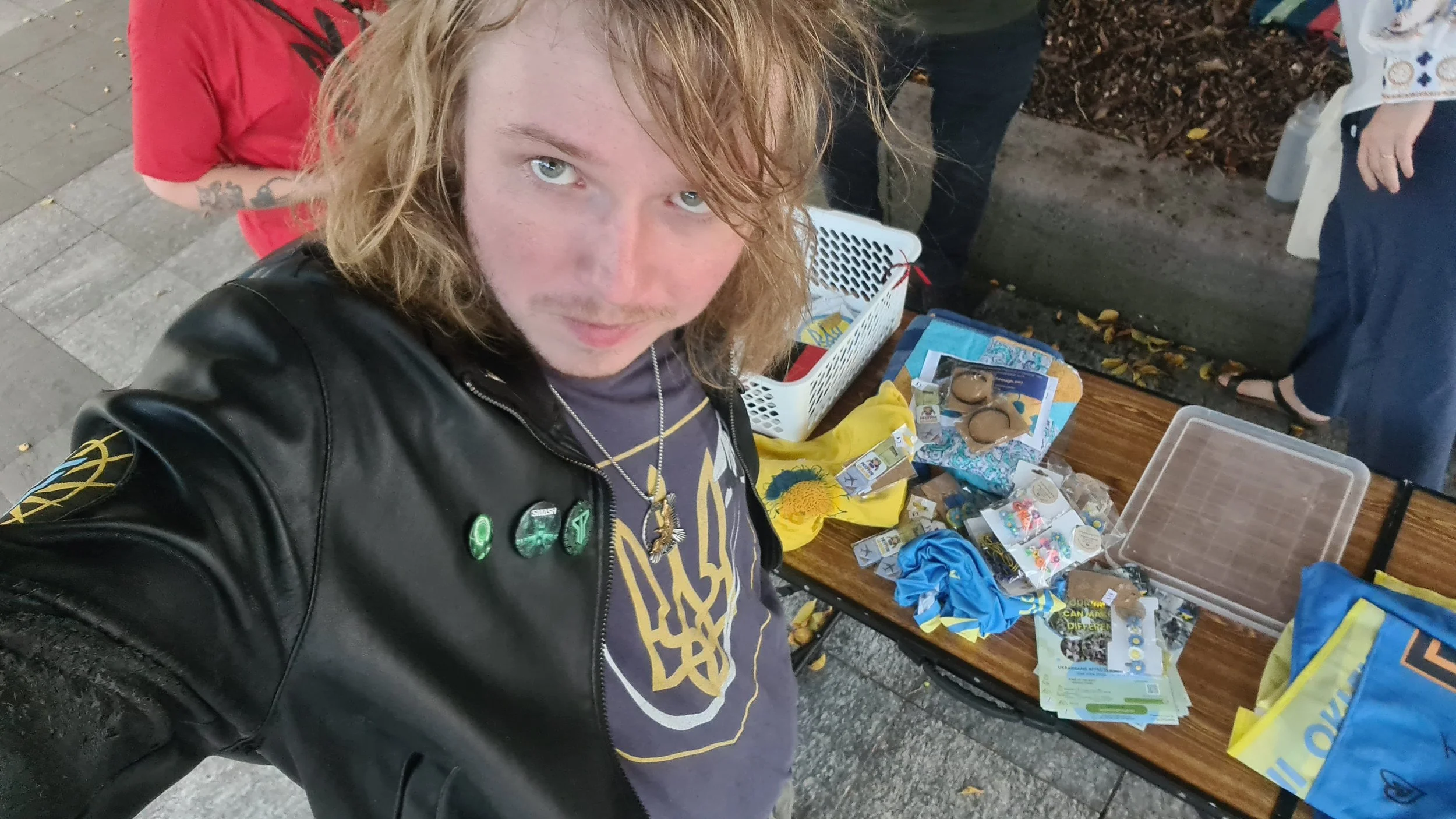
The Volunteers
In return, I shared some of my own experiences. I spoke carefully of friend, whose name I cannot say outside of the circle, but whose deeds were known by those who remember responsibility, made the ultimate sacrifice in Avdiivka. The war isn’t abstract when you know someone who didn’t come back.
As a member of a Leos Club, I also mentioned Oleksandra Mulkevich of the Kyiv Leos Club, a medic in Chernihiv. Her unarmed Subaru, clearly marked with a white medical cross, was destroyed by a Russian FPV drone.
“There is zero chance — Zero! — that the drone operator didn’t see the white medic cross on the hood of her car,” I said.
“Those are targets to them,” Lara sighed.
I clarified that it was a medic cross, not the white Cossack cross the Ukrainian Army uses on some vehicles. Those are the targets she meant, of course. The broader point stood. There is a documented pattern in modern warfare, and not only in Ukraine, of medical facilities and vehicles being struck.
As an example, I cited allegations from Syria, where the Russian Aerospace Forces were accused of targeting medical facilities in Free Syrian Army-held areas during the decisive last battle of Aleppo, a campaign that left whole districts reduced to rubble. Some victory…
The conversation wasn’t just academic or geopolitical theory. It was personal. These aren’t “strategic incidents.” They are fractures in real human lives. And yet, even in the heaviness of that exchange, something powerful was present.
We were not alone. We were speaking openly, standing among others who understood. The vigil wasn’t large, nor televised in a major way. There, on a warm Cairns afternoon, grief, courage, prayer, and solidarity all stood side by side. And sometimes that is what community looks like.
At one point the conversation turned to Oscar Jenkins. The Australian volunteer who had been captured and transferred into Russian custody.
Jenkins, a former schoolteacher from Melbourne, had travelled to Ukraine and enlisted in the International Legion of the Ukrainian Armed Forces. That detail matters. Under international law, there is a distinction between a mercenary and a foreign national who formally joins the armed forces of a state engaged in conflict.
Mercenaries, as defined under Article 47 of Additional Protocol I to the Geneva Conventions, are motivated primarily by private gain, are not members of the armed forces of a party to the conflict, and are not nationals or residents of the state they fight for.
Foreign volunteers who sign contracts and serve within a recognised national military structure generally fall into a different category. Such is why more storied French Foreign Legion is not classed as a mercenary force.
Jenkins was captured in Russian-occupied territory and later shown in Russian media footage. Russian authorities described him as a mercenary. A label Moscow has frequently applied to foreign volunteers fighting for Ukraine. Australia’s government, meanwhile, stated that he should be treated as a prisoner of war under the Geneva Conventions and called for humane treatment and consular access. However, if what little of Russian prison I know is true, we can only pray he endures.
This demonstrates how eager Moscow and their state media puppets are to slander names of people they don’t like.
“They still call us Nazis,” Lola said. “My grandfather was in the Red Army. He helped liberate concentration camps.”
Her family knew what real Nazis were. They knew what persecution looked like. It wasn’t an abstract political insult to them. It was history, lived and inherited.
That moment brought me back to something I had heard in Overreach during the drive north.
Yes. In 2014, during the chaotic early days of the Donbas conflict, there were volunteer battalions. Some had nationalist ideologies. Some had loose associations with far-right movements like Right Sector. Azov, the most well-known of them, began as a volunteer battalion before being formally incorporated into Ukraine’s National Guard.
But Matthews makes clear that these groups represented a small fraction of Ukraine’s overall fighting force.
In national politics, far-right parties have consistently performed poorly. In the Verkhovna Rada, which has 450 seats, ultranationalist parties have historically secured only a handful of seats — often struggling to pass electoral thresholds at all. In many local elections, their results barely reached single digits.
That context matters.
How did we get here?
Speaking of the proper gander at the propaganda… At one point in the evening, I mentioned what I’ve come to think of as a “where it started” moment. Not militarily, but rhetorically.
Back in 2004, during the presidential contest between Viktor Yushchenko and Viktor Yanukovych, campaign rhetoric began to harden. Yanukovych’s political camp, encouraged by advisers and sympathetic media, increasingly portrayed Yushchenko and his supporters as “fascists.”
In post-Soviet societies, that word is not a throwaway insult. It is among the most serious accusations imaginable. The Second World War, the Great Patriotic War in their wording, remains central to collective memory. To call someone a fascist is to place them morally alongside the historical enemy. And for Yushchenko, the charge carried a bitter irony. His father had served in the Red Army and was captured by the Nazis, surviving imprisonment in a concentration camp. His mother, by many accounts, had risked her life sheltering Jewish refugees during the war.
To brand such a man a “Nazi” was not merely political hyperbole. It was deeply personal. The election crisis that followed, and the eventual Orange Revolution, resolved that particular contest. But the rhetorical weapon did not disappear. In the years that followed, the language of “denazification” and “fascism” would resurface in increasingly official Russian narratives about Ukraine. What began as campaign attack language in a domestic political struggle evolved into a central framing device in Kremlin discourse.
Words, once normalised, rarely stay confined to their original battlefield. And standing there in Cairns, talking with people who had family at the front, it struck me how powerful that long arc has been.
There was also the extent to which that political struggle turned dark. In September 2004, during the presidential campaign, Viktor Yushchenko attended a dinner meeting with senior Ukrainian security officials. Shortly afterward, he fell violently ill. He was eventually flown to Vienna for specialist treatment. Tests conducted there revealed extraordinarily high levels of dioxin in his bloodstream — later identified as TCDD, one of the most toxic forms of dioxin
Yushchenko survived, but his face was permanently scarred. What had begun as a heated election campaign now carried the shadow of something far more sinister. The case was never fully resolved in court, and responsibility was never definitively adjudicated in a way that produced universal acceptance. But the episode deepened distrust and intensified the already volatile political atmosphere.
It was a reminder that in parts of the post-Soviet space, political rivalry has not always been confined to debate stages. Standing on the Esplanade years later, reflecting on how rhetoric escalates, I couldn’t help but think about that dinner in 2004.
Another history-book moment I carried in my bookworm mind that evening was Chechnya.
I remembered the story of Natalia Estemirova, the human rights activist who documented abductions and torture during the Chechen conflict. In 2009, she was kidnapped outside her home in Grozny. Hours later, she was found shot dead. Her colleagues had warned that what was happening in Chechnya, from disappearances to intimidation and collective punishment, was not an isolated aberration. It was a method.
Years later, some Chechen voices, chief among them Natalia’s surviving daughter, would publicly say they recognised familiar patterns in Ukraine.
Lola nodded when I mentioned Chechnya.
“I’m old enough to remember,” she said. “I saw how it happened.”
There was no dramatic flourish in her tone. Just recognition. For some, Ukraine is a new war. For others, it feels like a continuation.
When The Antonov Came To Town
One Sunday, I was driving through Garbutt to get to Bushland Beach, where I could do some good Menulog deliveries, earning some more money by driving at longer range. However, as I reached the part of Ingham Road that passes the airport, I see cars parked in the grass on the other side. Usually, you might see one of two plane-spotters parked there, giving the Air Force security staff headaches with their photographing. This time, however, I see cars lined up like a country fete or a circus was coming to town.
I pulled over to a nice couple, who I’d be alongside for this event, and said, “Hey, who’s coming to town?”
“Antonov!” the lady said.
“What?!” I said amazed. I never thought I’d see one come to Townsville.
Sure enough, on FlightRadar24, I could see the Antonov An-124 Ruslan of Antonov Airlines on approach. I was nervous with excitement. Eventually, we looked to the south, scanning the cloudy skies for it. Amazingly, we could see it while it was still over Rasmussen, a dozen kilometres away. Massive and wide at 73.3 metres, it was almost too big to be called an airplane – more like a second-generation airship. Blue and yellow accents decorated its white airframe, solidifying the aircraft as a proud symbol of Ukraine, and flying monument to its creations.
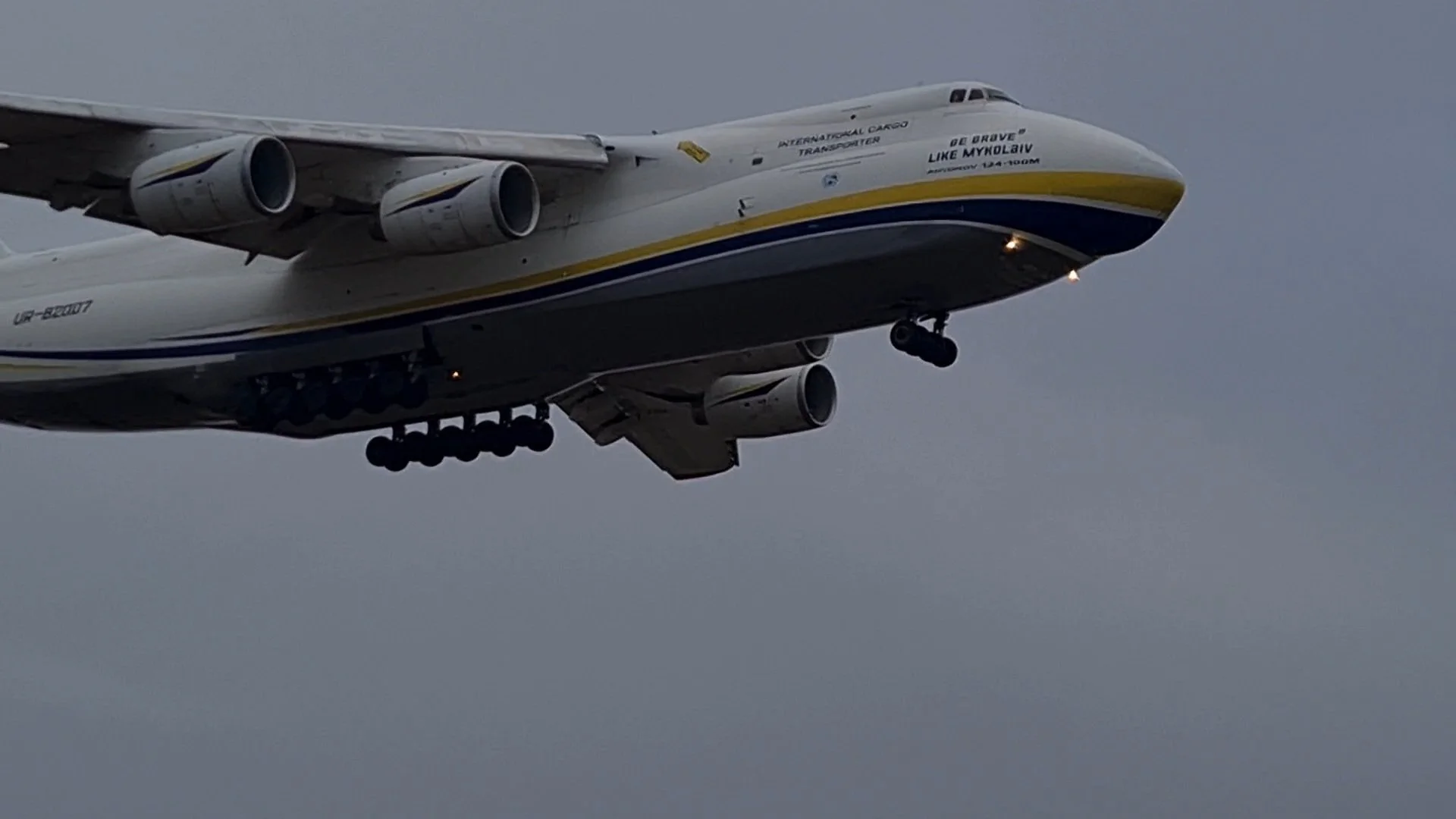
A photo of said Antonov An-124-100M as it came in to land at Townsville International Airport
As the flying titan roared overhead in a majestic sight, on its nose read “Be Brave Like Mykolaiv.”
That phrase wasn’t random.
In early 2022, Russian forces advancing north from Crimea aimed to seize Mykolaiv and potentially push further west toward Odesa. Instead, they were repelled. The city held.
I read about the whole battle in The Russo-Ukrainian War. That book also named Major General Dmytro Marchenko played a key operational role in organising the defence in the region. At the same time, Governor Vitaliy Kim became a symbol of calm defiance, delivering daily updates with a mix of humour and steel that resonated far beyond the oblast.
But when I mentioned Marchenko, I also remembered something older. From 2014 to 2015, Ukrainian defenders held the shattered Donetsk International Airport against relentless assault. The nickname “Cyborgs” reportedly originated with opposing fighters — because the defenders seemed to endure beyond what was humanly possible.
And in many ways, Mykolaiv in 2022 felt like that same spirit resurfacing. Not the same battle. Not the same unit. But the same refusal to collapse on schedule.
Standing there on the Esplanade in Cairns, talking to Lara and Lola, I realised how surreal it was.
A Ukrainian-built heavy airlifter roaring over Garbutt, referring to a southern Ukrainian city holding against an offensive. History felt both distant and immediate. Sometimes it is printed in textbooks, sometimes it thunders overhead at low altitude.
The Invisible Force
At one point, something shifted the mood. Lola’s and Isaac’s eyes suddenly lit up like New Year’s Eve fireworks, when I pointed out the patches on my black jacket. On my right sleeve was a blue-and-yellow logo of Within Temptation, the other their traditional red style. That was all it took. Recognition, in harmony with connection.
Within Temptation, and their vocalist Sharon den Adel, have been vocal in raising awareness for Ukraine since the full-scale invasion began. The band didn’t just post statements; they engaged publicly, collaborated with Ukrainian artists, and even travelled into Ukraine to document what was happening.
So suddenly our quiet vigil conversation pivoted into music. I told them about seeing Within Temptation live at the Princess Theatre in Brisbane. As I scrolled through my phone, my nerves jittered with the electricity of that room, the anticipation in the crowd, the lights dimming before the opening chords.
One of the defining images of the Bleed Out tour was Sharon striding forward during We Go To War, wearing a striking gold top and silver eye-covering mask, a theatrical and defiant addition tying in to the symbolism of the song for which the tour was named. She started the concert in an Australian-flag-themed top, which added to celebration of them finally coming to the birthplace of Sharon’s hero, Olivia Newton-John.
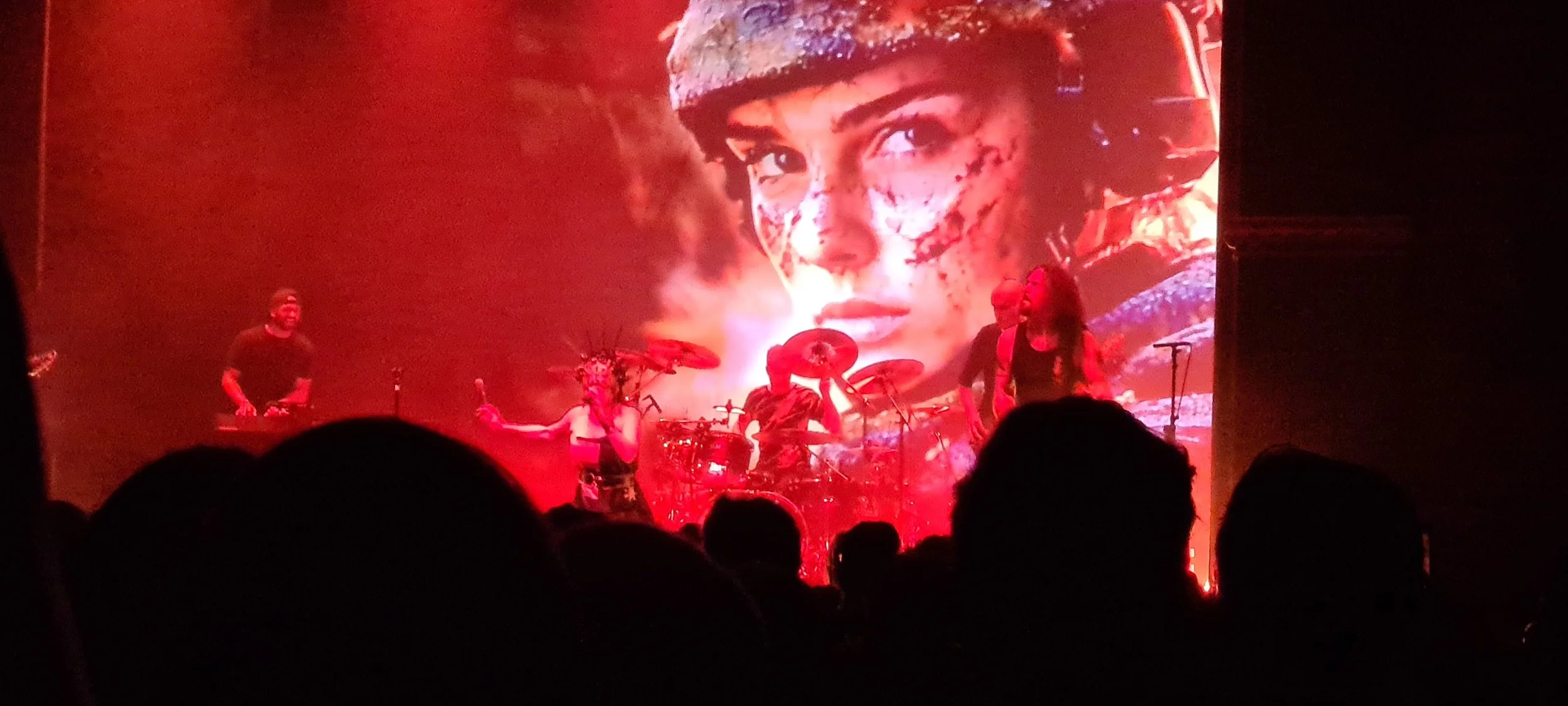
One of my photos from that night, as they played We Go To War.
A girl near us shouted, “I love you, Sharon!”
And without missing a beat, Sharon answered, “I love you too.”
I also told them how Supernova, the song in memory of Sharon’s late father, had carried personal meaning for me, how certain lyrics had helped me through my uncle’s passing the day after the concert. Music does that. It holds things we can’t always articulate. It becomes memory storage. When I posted about that song helping me through such times immediately after seeing it live, barely a few hours went by before Within Temptation’s official account commented “💙✨♥️🍀.”
Later, I mentioned Ruud Jolie’s book In Spotlight And In Shadow, the guitarist’s reflections as sincere as well as extraordinarily funny. There was also the band’s Invisible Force documentary, where they travelled into Ukraine proper, speaking with civilians and musicians, putting faces to what so many only see in headlines.
For Lola and Isaac, that mattered. It wasn’t just about military analysis or history books. It was about artists standing up. About cultural voices refusing neutrality in the face of invasion. On a Cairns waterfront, beside candles and Ukrainian flags, a Dutch symphonic metal band became common ground between strangers. And in that moment, the vigil felt less like a small gathering and more like part of something wider. Because solidarity isn’t only diplomatic. Sometimes it’s stitched onto a sleeve or sung at full volume. Sometimes it’s shouted from a Brisbane theatre balcony and shouted back.
Other authors’ stories
“I recommend a lot of books, don’t I?” I said like the bookworm I was. Isaac and Lola smiled. No one seemed to mind. If anything, the conversation seemed to deepen because of it.
One of the first I mentioned was Overreach by Owen Matthews, which I already mentioned.
Then there was A Bunker in Kyiv by John Lyons, written by an Australian foreign correspondent who spent time in Ukraine during the early months of the invasion. As his previous bestseller A Balcony Over Jerusalem did, his account captures something news headlines rarely do. In this instance, it was the strange mixture of fear, resilience, and dark humour among civilians living under the threat of missiles.
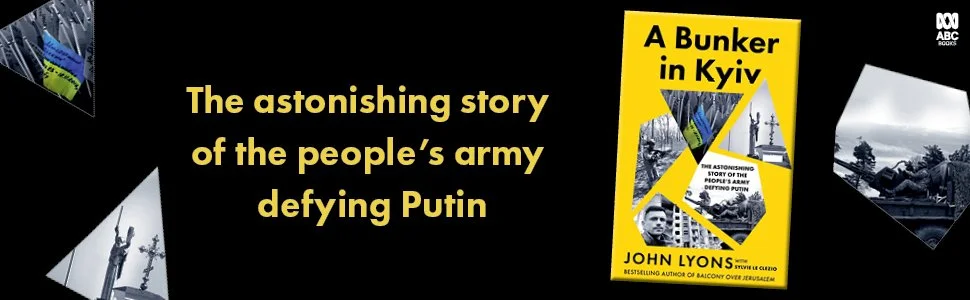
An promotional image of the book. I myself was listening to the audiobook on Spotify.
The key example of that book was how Lyons went into detail about the dreaded Kinzhal missile. Launched from high-speed aircraft such as the MiG-31K, the Kh-47M2 Kinzhal “is to missiles what taipans are to snakes.” When Ukrainian early-warning systems detect the launch platform preparing to fire, civilians sometimes have only minutes between the alert appearing on their phones and the moment they must find shelter.
But Lyons also notes something more psychological. The missiles do not even need to be fired to have an effect. When MiG-31 aircraft take off and begin flying patrol patterns, their movements can be detected by NATO early-warning systems and passed along to Ukrainian authorities. Air-raid sirens sound. Phones buzz with warnings. People wake up, grab their children, head for stairwells, basements, or subway stations… And sometimes, nothing is launched.
The aircraft simply circle, the sirens stop, then hours later it may happen again. For the people on the ground, the result is the same: sleep broken, nerves frayed, the constant sense that something devastating might arrive within minutes.
“It’s sadism,” I called it in the moment.
And the one I was literally carrying with me on the trip: Night Train to Odesa by Jen Stout. That book had been sitting in my backpack the entire road journey north. I had been reading it in the backpackers’ place. Such were Jen’s stories of railway journeys, soldiers, volunteers, and ordinary Ukrainians moving through a country at war.
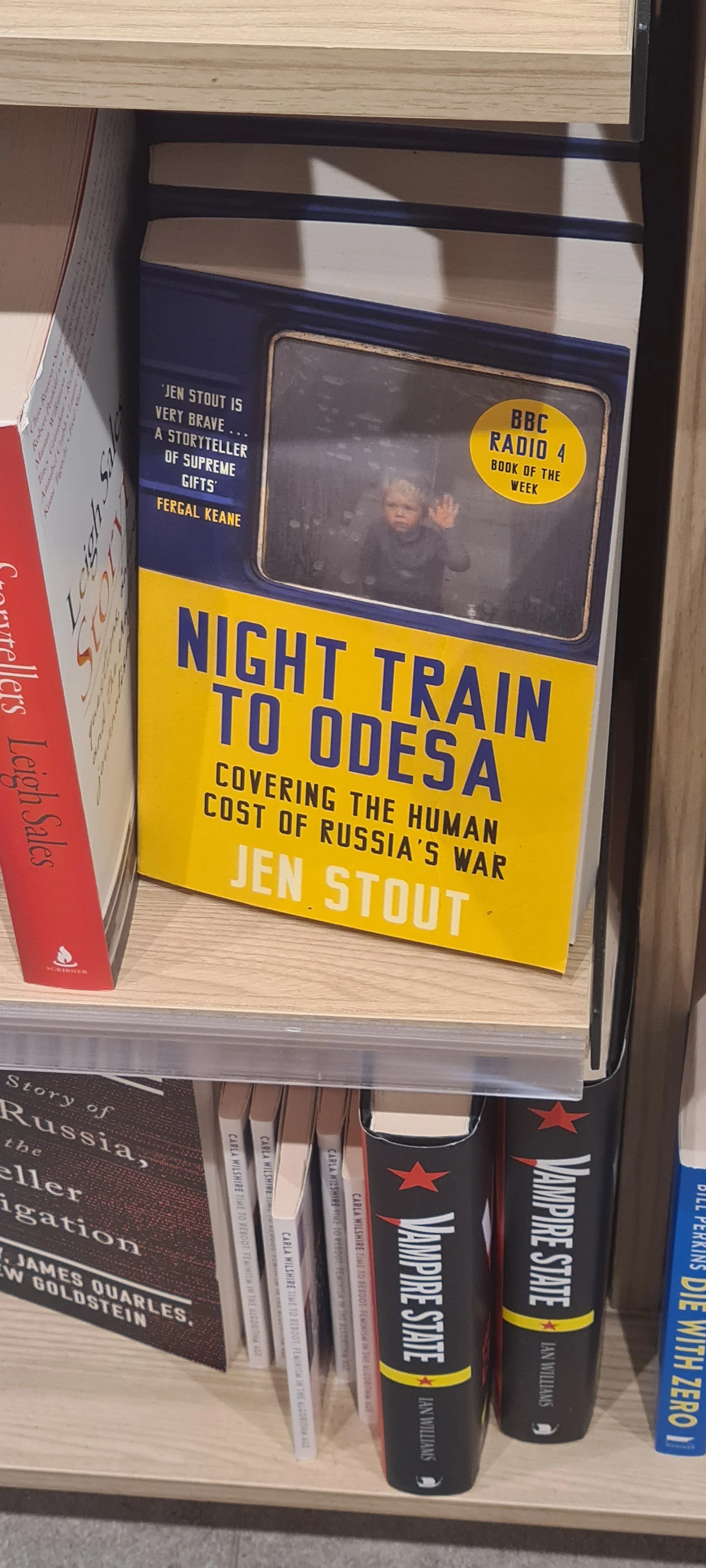
The copy I acquired from Brisbane Airport, which I carried with me on that day.
Going back to the Syrian allegations and targeting of civilians, the book offers this quote:
“It had to be deliberate; the Russians couldn’t be that bad at aiming. And as the BBC correspondent Quentin Sommerville had pointed out, walking down a devasted Kharkiv street in early March, ‘If these tactics are unfamiliar to you, you haven’t been paying attention, because this is the Russian attack playbook, perfected in over ten years of war in Syria.’
The terror, in this strategy, is the whole point.”
There was also this quote from a Ukrainian woman the author spoke to:
“‘Unfortunately, Russians never learned what being a Nazi means.’ Specifically, she said, the crimes committed in Ukraine during the 20th century had gone unpunished. The Holodomor famine and the murder of writers in the 1920s. The world turned a blind eye both to these Soviet-era atrocities and then later to Russia's aggression in Chechnya, Georgia, Moldova, Crimea. It could have been halted, the Russian war machine, she was sure of it. But the world had shrugged.”
Anger is a sword that must be sheated…
We had many a vulnerable conversation, because for many, the war hits so deep. The losses make deep cuts, and the threat that the Russian invasion proposes to all of Ukrainian communities around the world is potent.
I had also told about the monsters that control the propaganda in Russia and how their trolling can drive me to the point of rage, especially in 2022 when I was writing a character and trying to make them as evil as possible by copying the notes of some of the American propagandists. But I told myself and them, which they agreed, we cannot let our rage get the control of us, otherwise, they have won over us. Many of those trolls are not even real, instead some constructs formed in the cesspool of Russian bot farm. Are you're going to let some bot aggravate you? It is exactly what they want, and many agreed. Lara recorded a particular viral Bible verse.
Heroes of the Sky
There were, admittedly, a lot of aviation-geek moments. I say that as an aviation student — I can’t help it. If there’s a discussion about aircraft, my brain lights up like a radar screen. It still amazes me how Ukraine has managed, for much of this war, with aircraft that were already considered aging in the 1990s. From the MiG-29 Fulcrum, Su-25 Frogfoot and Su-24 Fencer. Cold War designs with analogue gauges, Soviet ergonomics, and airframes older than some of the pilots flying them. And yet — they held the line in the early months.
Isaac mentioned something that made my inner avionics nerd grin: a story of Ukrainian Su-25s mounting consumer devices, even iPhones, in cockpits to assist with navigation or situational awareness. Whether fully accurate in every reported detail or not, it reflects something very real: battlefield improvisation.
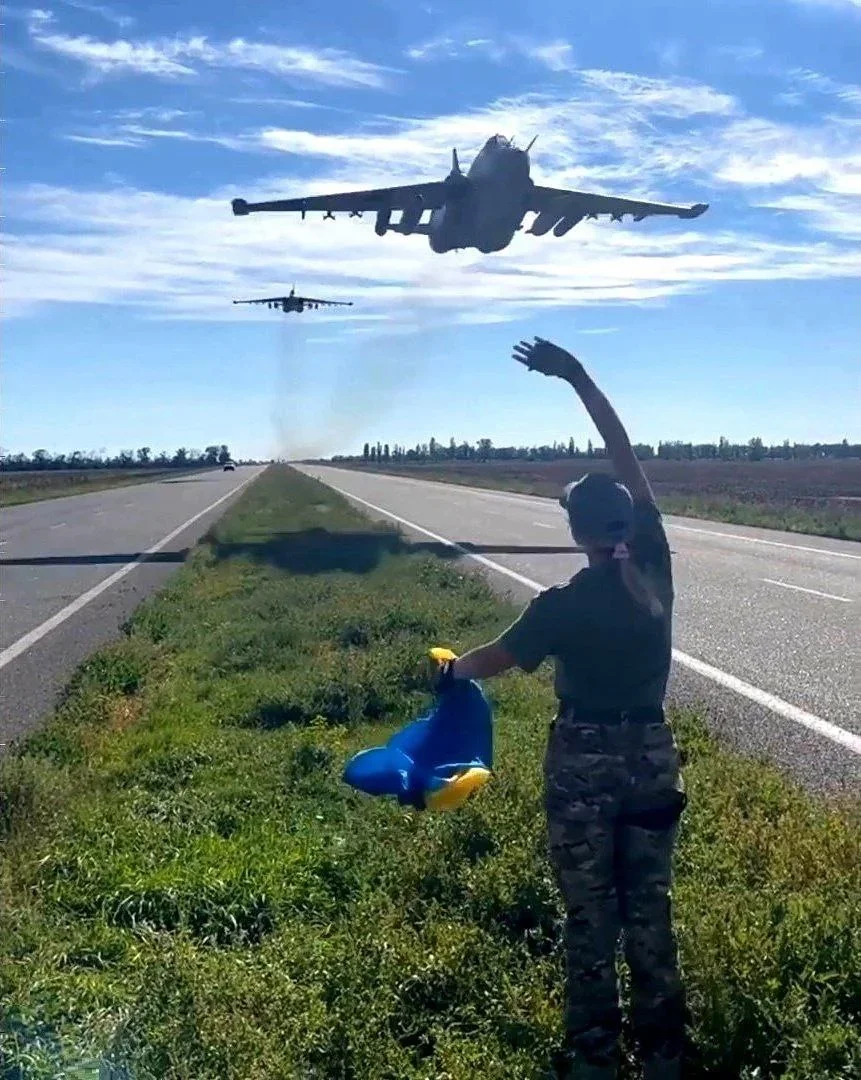
The aforementioned Sukhoi Su-25 Grach fighter, NATO Reporting Name: Frogfoot, in service of the Ukrainian Air Force
Seen here feeling the need for speed!
Ukraine has leaned heavily on commercial tech integration to compensate for gaps in legacy systems. In a war defined by drones and distributed data, that kind of adaptability matters. To think that somewhere, an old Frogfoot was probably running more modern situational awareness software through a suction-mounted phone than its original avionics suite ever dreamed of.
Meanwhile, I remembered an image that had circulated on subreddits: a Su-24 cockpit, the supposedly “more advanced” Russian Aerospace Forces with what appeared to be a consumer marine GPS/speed device mounted inside – “The kind used on boats!”
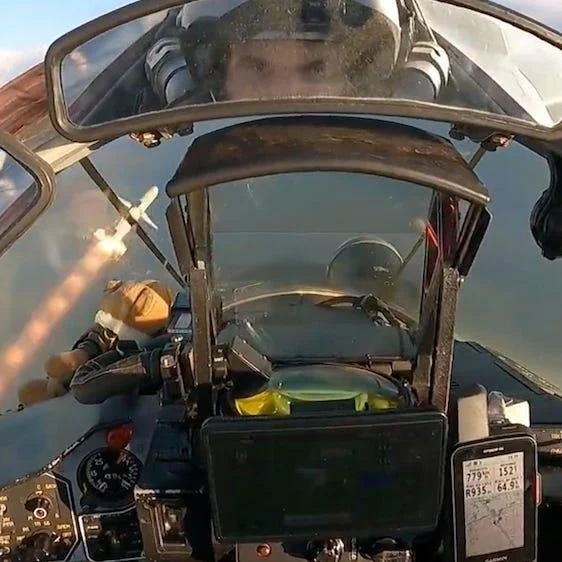
A Ukrainian Air Force Mikoyan-Gurevich MiG-29 Fulcrum firing an AGM-88 High-Speed Anti-Radiation Missile, with a commercial tablet mounted beneath the HUD (Head-Up Display), apparently providing moving-map or targeting information that the original analogue cockpit wasn't designed to display.
A smartphone or commercial GPS device is mounted to the right side of the instrument panel. This is certainly not part of the original MiG-29 equipment and illustrates Ukraine's field-expedient approach to integrating Western weapons and navigation aids.
The rest of the cockpit remains unmistakably Soviet-era, with rows of analogue gauges surrounding modern consumer electronics. The juxtaposition is striking.
There was also how Ukrainian MiG-29s were adapted to fire the US-produced AGM-88 HARM anti-radar missile, a weapon originally designed for NATO aircraft. That integration of a Western missile and Soviet airframe was something few analysts would have predicted before 2022. That is impressive, for such weapons are not plug-and-play compatible, owing to different hardpoint interfaces, digital bus architecture, targeting pods and radar symbology, missile communication protocols and so on… You cannot simply bolt an AMRAAM missile onto a Su-30 and expect it to function, even if the pylon physically fits.
Not a lot of other air forces could do that. Even in 2014, when the Iraqi Air Force rushed Su-25s into service against ISIS, they flew them largely as Soviet-designed platforms. There was no rapid marriage of Western air-to-ground Maverick missiles onto Frogfoots. Ukraine’s integration of AGM-88 HARMs onto MiG-29s was something different — a wartime improvisation born of necessity against a peer adversary. Even today, the Royal Malaysian Air Force flies both western F/A-18Ds and eastern Su-30MKMs with separate and largely incompatible weapons ecosystems, which will do them little favours in a possible war scenario. Logistics divide along political lines.
And now, the transition begins. F-16s are entering Ukrainian service. Mirage 2000 variants are being pledged. Longer-term discussions have touched on aircraft like the Gripen or Rafale, though those remain subject to political, logistical, and training timelines.
You Are Not Alone
The friendly conversations went on until 6:20PM when we all said our goodbyes, and the locals would go back to there various homes in Cairns and the Atherton Tablelands. I hugged Lola and Lara so tightly, wishing them the very best of luck, reminding them that they are valuable and they matter, and they are not alone. I quoted what Sharon den Adel wrote in My Indigo’s Out of the Darkness…
“When the day turns to night
And you run out of candles to burn
And you can’t find a light…
You’re not alone.
You’re not alone.”
Very much in keeping with the theme of an album made during a period of personal burnout and stepping away from arena stages to confront something quieter and heavier.
The Sun Also Rises, so it shall again
Later, I stand on the balcony of the backpackers place as the rain chased away anybody going on a walk or a pub crawl, and I didn't need that. I ended up having a few drinks in honour of my new comrades at the downstairs bar, and catching up on social media, Instagram, and getting the attention of a few people in a time, it was a bit of difficult getting through all of that social media at once. The human brain is not intended for such rush of emotions.
Alas, I came out feeling positive and more self-confident now that I had expressed myself and stood up for others, I now those people have disappeared into the night, back to where they were living, some probably to the Tablelands, others to Cairns, and some returning to a war zone. I wish them the very best. Going on these travels makes me feel like a witness to something small, yet great. Not to grand historical turning points necessarily, but to small intersections that feel quietly significant. A vigil of a handful of people on a tropical waterfront. Music in Sanskrit over a Celtic melody, an Antonov remembered over Garbutt and tears that didn’t hide.
I wonder if Ernest Hemingway felt like this. Was this the sort of feeling he carried while writing A Moveable Feast? The idea that moments, once lived, continue travelling with you. That places become internal rather than geographical. And of course, For Whom the Bell Tolls still sitting on my desk back home. That novel was one of the reasons I began writing in the first place. War not as spectacle, but as human strain. Philosophy pressed against mortality.
I am no Hemingway. But I understand now what it means to observe and then feel compelled to record.
The rain eased. The Esplanade lights reflected on wet pavement. The night grew quiet. Perhaps it was time to sleep before the long drive home.
So, I look to the night sky and bid that day “Goodbye…”
Oh, the summer time is coming,
And the trees are sweetly blooming,
And the wild mountain thyme
Grows around the blooming heather.
Will you go, lassie, go?
And we'll all go together
To pull wild mountain thyme
All around the blooming heather,
Will you go, lassie, go?
